
Kanazawa in Gardens, Workshops and Quiet Streets
Give the garden city several days, with time for craft traditions and neighborhoods beyond a single famous view.
Begin with the city’s separate districts
Kanazawa’s principal visitor areas are connected by manageable journeys, but they are not all clustered around one street. The station, castle and Kenrokuen area, Nagamachi and the eastern teahouse district each create a different point of reference. Choose a first walk near your accommodation and learn how local transport fits the distances. Planning by district prevents the day from becoming repeated crossings of the city to follow unrelated recommendations.
The station’s striking gateway is a useful arrival reference, but the garden and castle area lie elsewhere in the city. Check the current local transport map and group outings by district. Nagamachi can be explored with nearby central streets, while Higashi Chaya creates a different outing toward the river. If you are arriving with bags, use accommodation storage or an appropriate station facility before starting the cultural walk. Narrow lanes and garden paths are more enjoyable without luggage. A base with an easy station connection can be as useful as one beside a famous attraction, especially if the trip includes a short stay and an early onward departure.
Let Kenrokuen take its time
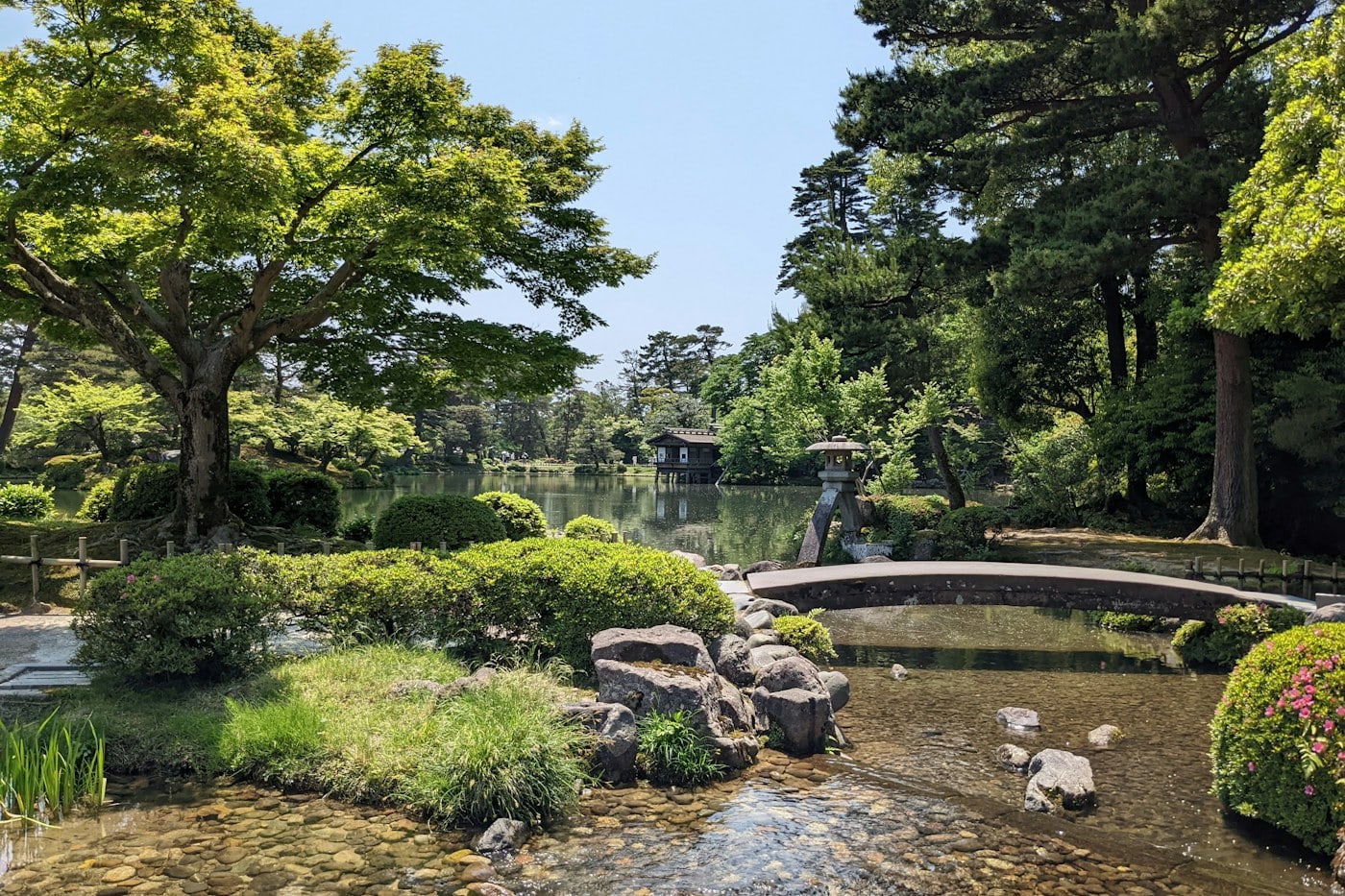
Kenrokuen rewards attention to composition: water, stones, paths, trees and changing views work together rather than presenting a single perfect photograph. Walk slowly enough to notice how a scene alters after a few steps. Seasonal character matters, but the garden should not be judged only against images from another month. Check official opening information and any current restrictions. A substantial garden visit can be the main event of a morning without another major attraction immediately afterward.
Kenrokuen’s ponds, bridges and carefully managed trees form a sequence rather than a single scene. The Kotoji-tōrō lantern is a recognizable feature, but standing in its photo queue should not consume the whole visit. Move beyond the familiar viewpoint and compare open water with more enclosed garden sections. The pine trees’ seasonal supports are part of a specific maintenance practice, not a permanent decoration guaranteed throughout the year. Conditions underfoot and the character of the garden also change with weather. Consult the official map for a route that suits your mobility, and take a break before the visit becomes a hurried search for every named feature.
Use the castle grounds as a companion
Kanazawa Castle Park offers a useful complement to Kenrokuen, with open spaces, defensive forms and reconstructed structures that explain a different kind of landscape. Distinguish between the grounds and interiors that may have separate access arrangements. The relationship between castle and garden becomes clearer when both receive some attention. There is no need to see every building in one visit. A walk through the grounds can provide breathing space after close observation in the garden.
The castle park and Kenrokuen are close enough to pair, but they ask for different kinds of attention. The garden rewards detail and shifting composition, while the castle site makes the scale of defensive space and former authority more apparent. Decide whether to enter reconstructed buildings or stay with the grounds. A paid interior should be chosen because its construction or interpretation interests you, not simply because it stands nearby. Look at gateways, walls and the changes in level between sections of the site. These features connect the historical complex to the shape of the modern city and provide a useful contrast to the garden’s carefully framed natural forms.
Read Nagamachi through its boundaries
Nagamachi’s lanes and earthen walls create a distinct atmosphere associated with former samurai residences. The appeal is partly in enclosure, texture and the limited views into private space. Some buildings welcome visitors; many others are homes or private premises. Follow clear access information and avoid treating every gate as an invitation. Choose one open residence or museum for context, then let the street walk remain modest and observant.
An open residence in Nagamachi, such as the Nomura family house when available to visitors, provides context that the walls alone cannot. Its interior and garden should be treated as a specific household setting rather than a generic model of all samurai life. Read the venue’s interpretation and note how rooms relate to a limited garden view. Outside, the earthen walls and water channels create the neighborhood’s distinctive texture. Keep to public lanes and avoid photographing into occupied homes. A short visit works best when it includes one contextual interior and time to notice the streets, rather than a search for every photogenic wall shown online.
Choose a craft to understand
Kanazawa is associated with several craft traditions, including gold leaf, lacquer and dyeing. Rather than collecting brief demonstrations of everything, choose one material that interests you. A museum, specialist shop or workshop can explain how it is worked and how contemporary makers use it. Ask what is made locally and what care an item requires. A purchase becomes more meaningful when its practical use and production are clear.
Gold leaf’s extremely thin material invites questions about handling and application, while lacquer and Kaga yuzen dyeing involve different processes and timescales. Choose a venue that explains one of these clearly. A hands-on session may produce a small object, but it is not equivalent to learning the full craft; ask what part of the process the activity represents. Shops can also carry items made with different levels of local involvement. Read the product description and ask where work took place. If buying a functional object, consider how you will use and maintain it at home. A carefully chosen bowl or textile deserves more thought than a quick comparison of decorative motifs.
Visit Higashi Chaya with awareness
The Higashi Chaya district’s wooden buildings and narrow streets make it visually distinctive, but the area combines visitor venues with ongoing local life. Go beyond taking a photograph down the central street. Read the information at a publicly accessible teahouse building or pause in a café that welcomes visitors. Respect private entrances and any photography restrictions. A quieter approach helps the district remain a neighborhood rather than a backdrop crowded by competing cameras.
Higashi Chaya lies near the Asano River, so a river walk can provide a calmer companion to the district’s busiest streets. A publicly accessible former teahouse building may explain how entertainment spaces were arranged, while a contemporary café offers a different kind of pause. These should not be confused with access to private premises. Check photography guidance before entering any building, since restrictions may differ between exterior views and rooms inside. If the main street feels crowded, do not push deeper into residential lanes merely to obtain an empty photograph. Return toward the public river route, where the district can be seen in a broader urban setting.
Let Omicho be a real meal
Omicho Market can introduce seafood and produce associated with the region, but it is also a busy commercial space. Walk through once before selecting a meal. Menus, queues and seating arrangements differ between businesses. Ask about ingredients and choose a portion that leaves you comfortable for the rest of the day. The market should not become an obligation to sample every recognizable item, especially when weather or appetite calls for something simpler.
Omicho’s seafood displays reflect the city’s relationship with the Sea of Japan, but a market visit should still be guided by what you want to eat. A bowl assembled from several toppings may look spectacular while being more than you need; ask about size and ingredients before ordering. Some businesses specialize in take-away food and others in seated meals, with separate queues or payment arrangements. Observe the layout before joining a line. If you have already planned a substantial dinner, a simpler market lunch can leave you more comfortable. Keep bought food out of busy passageways and follow the seller’s guidance about where it may be eaten.
Three days without repeating the same circuit
Give the first full day to Kenrokuen and a selective castle visit. Use the second for a craft interest and Nagamachi, with time for a considered meal. The third can combine Higashi Chaya with a river walk or a contemporary cultural venue. This is a starting pattern, not a rigid sequence; check current opening days and shift the interiors accordingly. Keep the market meal on whichever day brings you naturally nearby.
If you are arriving by train, use the station area to settle practical needs before beginning the cultural itinerary. Avoid carrying substantial luggage through the garden or narrow neighborhood streets when storage or a hotel arrangement would make the visit easier. The same care applies on departure day. A short return to a craft shop can fit comfortably before leaving, while a major garden visit may feel rushed. Let the last hours reflect the amount of attention you actually have available. Kanazawa is easier to appreciate when its different traditions have enough space to remain distinct.
Keep one afternoon without a headline sight
Kanazawa benefits from an afternoon that does not revolve around a famous attraction. Return to a craft shop, explore a nearby street or sit with a view of the river. The city’s different scales become more apparent when you are not moving continuously between major districts. Leave room for a venue that catches your attention after arrival. The final memory may be a small detail of making or gardening rather than the photograph you expected to take.
The Saigawa side of the city offers another possible river walk, distinct from the Asano River near Higashi Chaya. Choose the one that fits your accommodation and previous route rather than crossing the city to add water to the itinerary. A contemporary museum can provide a contrasting cultural stop, subject to its current exhibitions and access arrangements. If you prefer to stay outdoors, repeat a familiar neighborhood and look for the small relationship between gardens, walls and street fronts. The final afternoon is also a sensible time to return to a craft shop with a considered question or purchase. That return is more purposeful than making a hurried circuit of additional souvenir counters.