Luang Prabang with Time to Notice
A thoughtful stay built around the peninsula’s streets, riverside pauses and respect for a living religious landscape.
Begin with the peninsula
Luang Prabang’s old town sits on a peninsula between the Mekong and Nam Khan rivers. Walking from one side to the other gives an immediate sense of scale and orientation. Traditional timber houses, temples and later buildings share the same small area. Begin with a modest loop rather than treating the first day as a complete architectural survey. The town rewards attention to the spaces between major sites as much as the sites themselves.
The peninsula’s main street provides an easy starting line, while lanes toward the Mekong and Nam Khan create short cross-sections through the old town. A walk toward the northeastern end brings you close to major temple grounds, whereas the opposite direction connects with the busier market area. Choose a small circuit rather than repeatedly walking the full length. The riverside edges can involve steps or uneven ground, so an address near the water is not always the easiest one with luggage. On the first day, identify a shaded place for a meal and a straightforward route back. The town’s compactness is most enjoyable when you are not carrying too much through it.
Let temples remain places of practice
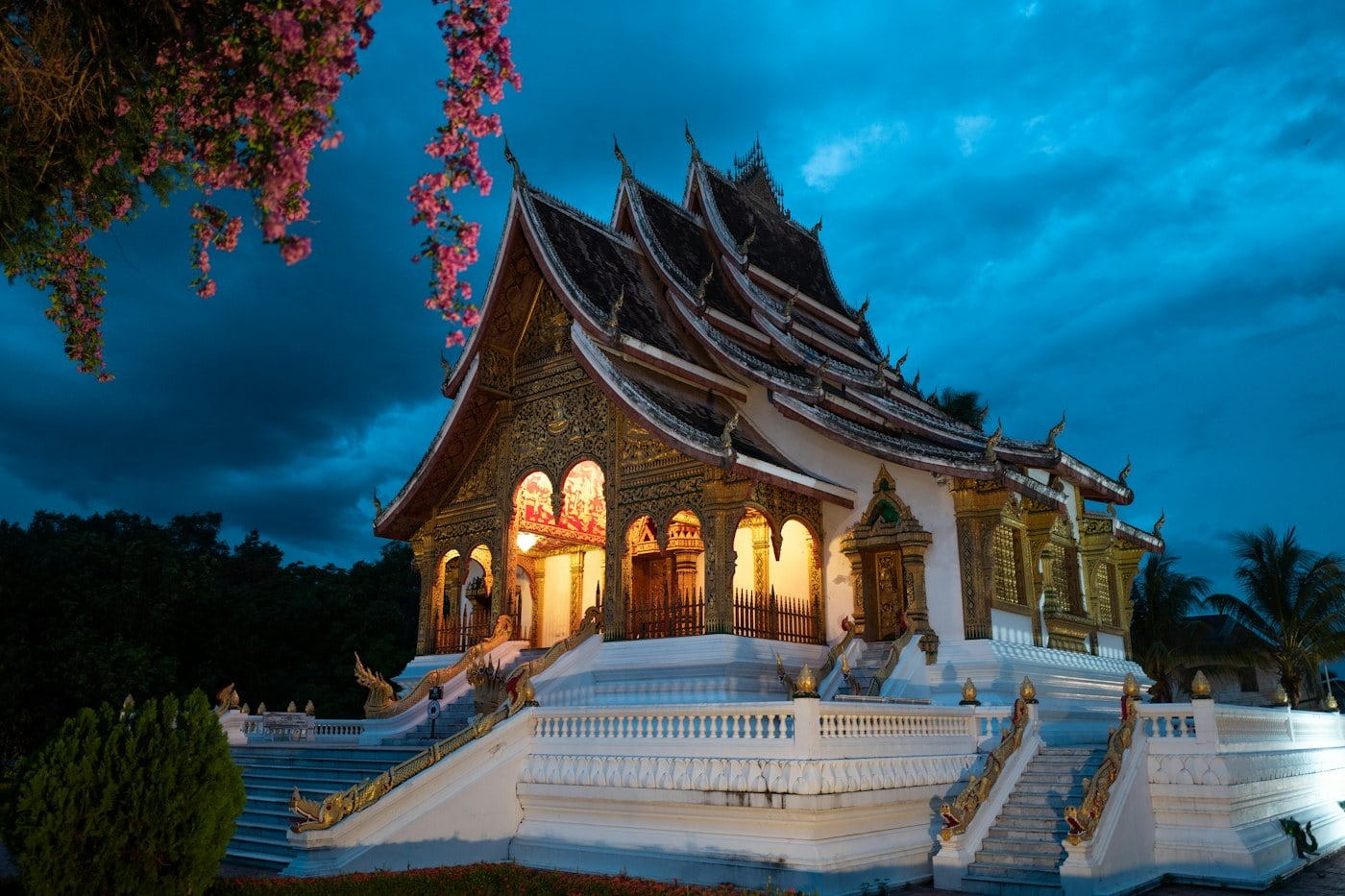
Temples in Luang Prabang are active religious spaces, not decorative backdrops. Dress appropriately, follow posted guidance and remove shoes where required. Speak quietly and give worshippers room. Wat Xieng Thong is among the best-known temple complexes, but smaller compounds also deserve respect rather than casual wandering without attention to access. A carefully considered visit to one site can be more meaningful than a hurried sequence of entrances and photographs.
At Wat Xieng Thong, look at how the roofs, decorative surfaces and smaller structures relate to the compound as a whole. The visit is not only about one facade. Other temples along the peninsula have different layouts and levels of visitor activity, so follow the guidance at each rather than carrying assumptions from the previous stop. Keep shoulders and knees appropriately covered according to local requirements and avoid stepping into spaces marked for religious use. Photography of buildings may be allowed where photography of people is not welcome. If a ceremony begins, move away from its path and observe only from a place that does not interfere. A quiet exit is preferable to trying to preserve a planned photograph.
Approach morning traditions with restraint
The morning alms tradition has drawn visitor attention, sometimes in ways that disrupt its religious purpose. Observation from a respectful distance is a better choice than joining without understanding the practice. Do not block the route, use flash or turn participants into a spectacle. If you are considering participation, seek reliable local guidance that prioritizes the community’s wishes. There is no need to witness every tradition in order to have a worthwhile stay.
The alms route passes through ordinary streets, which can make it appear accessible in a way that obscures the practice’s purpose. Standing in the roadway, stepping between participants or following closely with a camera changes the experience for those involved. Hotel or guide advice should be assessed by whether it emphasizes respectful distance and appropriate conduct rather than promising a privileged view. You can choose an early walk elsewhere instead. The river at that hour, a quiet breakfast or the market can offer a meaningful morning without placing yourself inside a religious routine. Not every significant local practice needs to become a visitor activity, and deciding not to participate can be the more thoughtful choice.
Make the market a lesson in everyday life
A morning market offers a different view from the evening visitor-oriented stalls. Ingredients, prepared foods and household purchases reflect practical needs. Look before buying and ask clear questions about unfamiliar items. Some foods may not suit every traveler’s dietary preferences, and curiosity does not require tasting everything. Keep aisles clear and respect requests about photography. The experience is most valuable when it encourages better understanding rather than a hunt for the strangest thing on display.
Morning food shopping and the evening market serve different purposes, so do not expect the same goods or atmosphere at both. A morning visit can show ingredients intended for local kitchens, while evening stalls may emphasize prepared food, textiles and other visitor purchases. Choose what you are interested in understanding before you go. If buying breakfast, find out whether food should be eaten at the stall or taken away. Ingredients may include herbs, fish products or meat that are not apparent from appearance alone. Ask a concise question and accept that a busy vendor may not have time for a long explanation. Move to the side before deciding what to buy next.
Use the rivers as places to pause
The Mekong and Nam Khan create different edges to the town. A riverside seat can offer time to watch boats, shifting light and ordinary movement along the banks. Choose a public or clearly welcoming place and be considerate around working areas. A boat outing, if desired, deserves its own planning: operator information, boarding arrangements and the actual route matter. The presence of water does not mean every informal offer will match your expectations.
A Mekong outing can provide broad river views, while the Nam Khan side offers a different, more enclosed relationship between town and water. Seasonal conditions can affect the appearance and accessibility of the banks, so do not rely on an old photograph to choose a route. If considering a trip toward the Pak Ou caves, understand the full duration and what stops are included rather than booking only from the destination’s name. Ask about boarding, shade and the return arrangement. A short riverside walk may be the better choice if you mainly want to watch the light change. The setting does not require a boat booking in order to be appreciated.
Choose one excursion, not every excursion
Waterfalls, villages and countryside outings are often added to a Luang Prabang stay. A thoughtful excursion begins with realistic travel time and an interest in the destination beyond its photographs. If visiting Kuang Si, check current access and follow local rules about paths and water use. Avoid assuming a natural site will be quiet or unchanged from images online. Give an outing enough time that the return does not become a hurried drive to another booking.
Kuang Si is a distinct outing from the old-town peninsula, with transport and on-site walking to consider. Confirm what areas are currently open and follow instructions about trails, bathing and protected sections. Water color and flow vary, so judge the visit by its actual conditions rather than a single familiar image. Arrange a return time that allows you to walk without being hurried by a waiting driver. If several travelers share transport, agree on the main purpose of the trip beforehand: a short look, a longer walk and extended time near the water imply different schedules. Keep the evening afterward uncomplicated, especially if the outing involves more walking than expected.
Buy crafts with a question in mind
Textiles and other crafts can be meaningful purchases when you understand something about their making. Ask where an item was produced, which materials are used and whether the seller can explain the process. Not everything displayed in a local market is made nearby. A shop or workshop that offers clear information can be more useful than a large selection with vague claims. Buy something you value and can care for rather than a token chosen only to complete the visit.
A textile-focused visit can distinguish the finished object from the labor behind it. Look for information about fiber, dye and weaving technique, and ask which parts of production take place locally. A workshop demonstration or cultural venue may provide clearer context than a large stall display, but only if the venue genuinely explains its process. Do not assume that a high price or elaborate story proves origin. Choose an item you can use and care for, and ask about washing, sunlight or storage where relevant. The purchase should be voluntary rather than a reward expected after a demonstration. A smaller, well-understood object can carry more meaning than a bag of loosely described souvenirs.
Choose the length of stay around its rhythm
Three or four full days allow Luang Prabang to be more than a sequence of famous scenes. Spend the first within the peninsula, use another for a carefully chosen excursion and leave at least one largely local day. A longer stay is worthwhile only if you enjoy the quieter hours. Do not fill those hours with activities simply because doing less initially feels unfamiliar.
Accommodation location can shape the visit substantially. Check the actual walk to the peninsula, the amount of road traffic nearby and the arrangements for arriving with luggage. A room outside the core may be restful, but it should not require repeated transfers you did not expect. Ask direct questions about the setting rather than judging entirely from decorative photographs. Keep a familiar place for breakfast or a relaxed meal. Returning to it gives the day an anchor and can reduce the tendency to treat every interaction as another item in a cultural itinerary.
Protect the quiet hours
Luang Prabang’s appeal is often described in terms of calm, but calm depends partly on visitors’ behavior. Keep evening noise considerate, respect residential streets and do not assume a relaxed atmosphere means boundaries are absent. Leave room for reading, a second walk and a familiar meal. A slower stay should reduce the pressure placed on both traveler and town. The final day can be a return to favorite places rather than a search for one last essential experience.
The peninsula’s evening atmosphere changes as markets and restaurants become active, but nearby houses and temple compounds do not cease to be private or religious spaces. Choose a meal within a comfortable walk and return quietly. If you want a social evening, use a venue designed for it rather than extending the conversation loudly through residential lanes. Before the final day, settle your transfer and luggage arrangements with the accommodation. A last breakfast and short river walk can then remain unhurried. Avoid booking a distant excursion immediately before departure unless the timing is genuinely generous. Luang Prabang’s appeal is strongest when its quieter hours are treated as part of the place rather than gaps to fill.