Palermo: Markets, Mosaics and the Space Between
Build a Palermo visit around distinct market streets, shaded interiors and meals that make sense of the city’s layered geography.
Choose a small part of a large city
Palermo is a substantial working city, not a single compact museum district. The historic center contains several distinct quarters and major roads, while the sea remains an important reference point. Start with a route between Quattro Canti and one nearby neighborhood. Let a first walk establish distances and street conditions before adding distant sights. Looking at a map in advance helps avoid repeatedly crossing the same busy roads while trying to follow unrelated recommendations.
Quattro Canti works as an orientation point because the principal streets cross there, but it is not a reason to keep returning to the same intersection. Plan a small loop through one quarter, then use the main streets to reconnect. The Cathedral and the Norman Palace are a different cluster from the waterfront, and a day that includes both needs breaks. Pavements, traffic and uneven surfaces can slow progress even when distances are modest. If you are arriving with luggage, ask your accommodation for the best vehicle drop-off or walking approach. A beautiful address in a narrow street may require a different route from the one a general map first suggests.
Read the market as a street
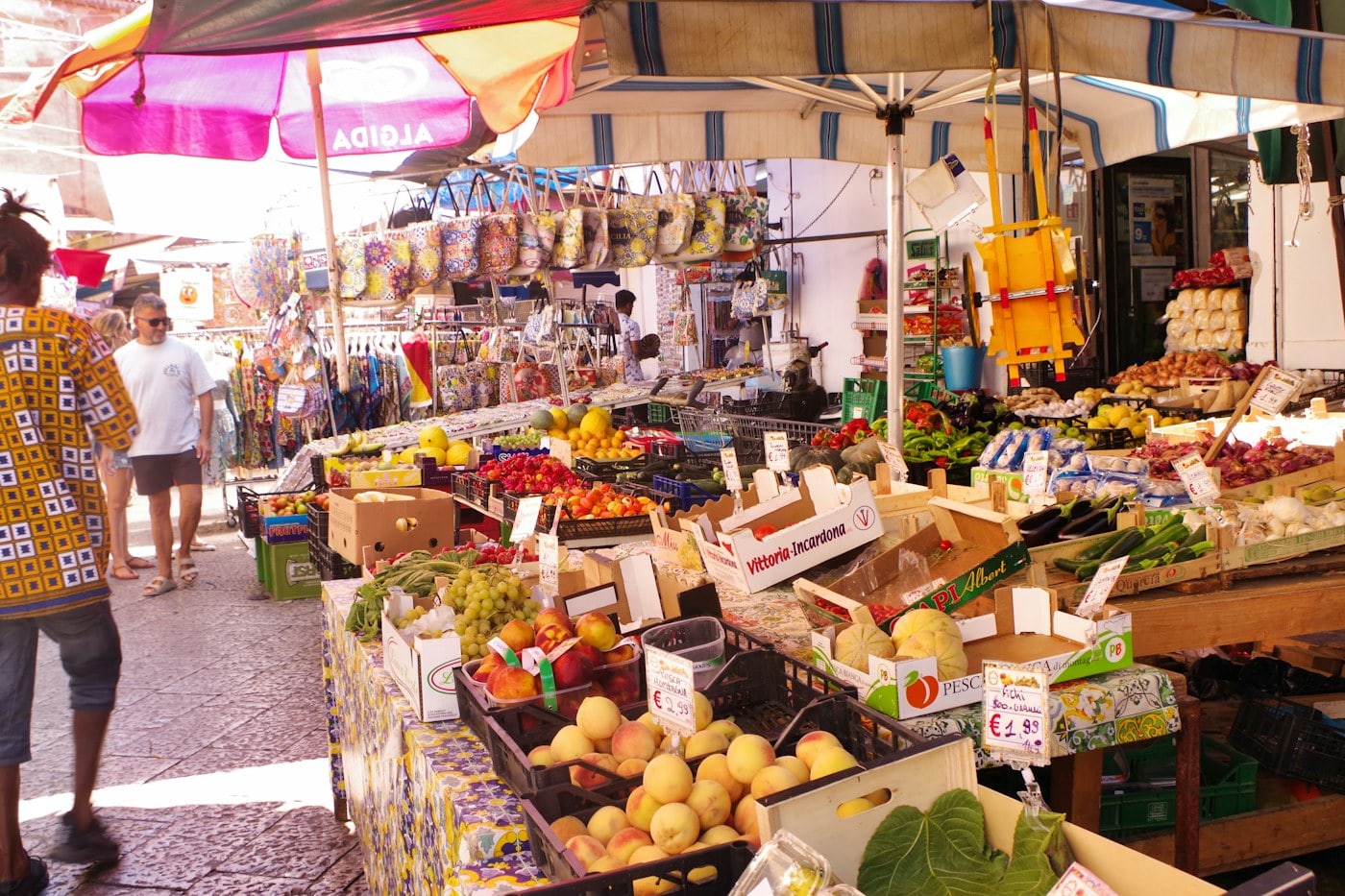
Ballarò and Capo are well-known market areas, each embedded in streets that continue to serve residents beyond the busiest selling hours. Produce displays, voices and food counters create atmosphere, but a market is also a place of work. Keep moving when space is tight, ask before close portraits and do not handle food casually. A short purchase followed by a pause at the edge of activity can reveal more than standing in the middle to film.
Ballarò is a natural choice if you are already exploring the area south of the main central axis, while Capo can fit a different walk closer to the Cathedral side of the center. Visiting both at peak activity in one morning may add less than spending time properly in one. The market’s produce stalls and prepared-food businesses have different rhythms, so ask what is ready rather than expecting every counter to provide the same meal all day. Settle the order and its total clearly. If a vendor invites you to taste something, understand whether it is a sample before accepting a larger portion. These ordinary transaction details make the atmosphere easier to enjoy.
Let street food be specific
Palermo’s street-food vocabulary includes panelle, crocchè and different forms of arancine, alongside dishes that contain meat or offal. Names alone may not make ingredients clear. Choose according to what you want to eat, not a test of adventurousness. A chickpea fritter sandwich can be a satisfying lunch in its own right. Where food is cooked to order, allow the vendor’s rhythm to lead rather than pressing for instant service.
Panelle are chickpea fritters, often served in bread, while crocchè bring potato into a similarly portable meal. Arancine may contain several fillings, so the color or shape is not a reliable ingredient guide. Pani ca meusa is a distinctly different choice involving offal; it should be ordered because you want it, not simply because it appears on a list of famous foods. Palermo’s fried snacks are best considered part of a meal rather than a prelude to another large lunch. Find somewhere appropriate to stand or sit, eat while the food is fresh and keep napkins and packaging under control. A crowded working counter is not a comfortable dining table.
Give a mosaic interior your full attention
Palermo’s Arab-Norman heritage becomes especially vivid in carefully chosen interiors, including the Palatine Chapel within the Norman Palace complex. These are places where architecture, mosaic and ceremonial history overlap. A crowded schedule can turn extraordinary rooms into blurred impressions. Choose one major interior for a dedicated visit and read enough beforehand to know what to look for. Access, tickets and any restrictions should be checked with the official venue rather than inferred from older travel accounts.
The Palatine Chapel is inside a larger palace setting, and the visit can involve more than entering a church directly from the street. Allow for the official access process and any restrictions connected with the wider complex. Elsewhere, churches such as La Martorana offer a different relationship between Byzantine mosaic, later decoration and an urban setting. Choose one principal interior and perhaps a smaller companion rather than a continuous sequence of gold surfaces. Looking at a room’s structure as well as its decoration helps: note where light enters, how the ceiling changes overhead and which parts belong to different periods. This makes the visit more specific than an undifferentiated impression of opulence.
Use shade as part of the itinerary
Heat and glare can shape a Palermo day as strongly as the sights. Arcades, churches, gardens and long indoor lunches provide changes of pace. This is not wasted time; looking at the city from a shaded seat often reveals details missed while hurrying. Build a route with places to pause rather than planning an uninterrupted walk across the center. Water and comfortable clothing are practical essentials, especially when stone surfaces hold warmth.
A useful hot-weather route moves from an outdoor market into a church or museum, then leaves the most exposed walk until later. Confirm that the indoor stop will actually be open at the time you need it; midday closure patterns vary by venue. A café is the fallback, but it should be chosen near the route rather than across town. Carry drinking water and identify a comfortable place for lunch before you become tired. If rain replaces heat, the same alternating structure works, although slippery paving may make the outdoor portions slower. Palermo’s dense center offers many possible interiors, but their accessibility cannot be inferred simply from an open-looking doorway.
Follow the city toward the sea
The waterfront gives the historic center another dimension. Around the Cala and the Foro Italico area, the relationship between port, open space and city becomes clearer. These are not simply scenic alternatives to the markets; they help explain Palermo’s outward-facing history. A walk here works well after dense streets and elaborate interiors. Follow clearly public paths, pay attention at crossings and resist extending the route merely because the water makes distances look deceptively easy.
The Cala and Foro Italico give different waterfront experiences: one retains the scale of a harbor basin, while the other opens into broader public space. Select a section that matches the amount of walking you want. Reaching the water also involves crossing roads, so use appropriate crossings rather than following a straight line from a map. A waterfront pause fits well after visiting the Kalsa area, but it need not be attached to every old-town outing. If you want a beach day elsewhere, treat it as a separate excursion with its own transport and conditions. The central waterfront’s value is its relationship with the city, not a promise of resort-style swimming.
Recognize that sweets have their own timing
Cannoli and other Sicilian sweets reward attention to preparation and freshness. A filled pastry is different from one assembled just before eating, and a large display is not the only sign of quality. Ask a simple question and choose a manageable portion. Almond, ricotta and fruit-based traditions coexist, so there is no need to order the same dessert everywhere. A café stop can become a useful pause between two parts of the city.
Cannoli are associated with a crisp shell and ricotta-based filling, a combination that becomes less distinct if left assembled too long. Ask whether the pastry is filled to order, but do not make that single question a theatrical test of a shop’s worth. Cassata offers a different, richer format, and almond pastries may travel more easily if you are buying something for later. Nuts and dairy are common enough that dietary questions should be explicit. A small sweet after a light lunch can fit the day better than several elaborate purchases made before a long walk. If taking pastries home, ask the shop how the item should be stored and how long it remains at its best.
A city stay before a Sicilian circuit
Palermo works well as a substantial stay at the beginning or end of a wider Sicilian journey, but do not use it only as the place where you collect a car and recover from a flight. Give the center full days without driving. If a rental vehicle is part of the onward plan, understand parking and access arrangements before bringing it near your accommodation. Historic streets are not the easiest place to improvise with luggage and an unfamiliar car.
For a three-day visit, choose a market-led day, an architecture-led day and a more open day for the waterfront or a return to places you enjoyed. Keep the main interior visit on the middle day if possible, when arrival and departure are less likely to interfere. A market lunch and a formal restaurant dinner do not both need to be large. Adjust the food plan to the walking and weather, leaving enough time to sit indoors when the city feels intense.
Keep the final day local
A tempting list of excursions can consume the last hours of a short Palermo stay. Consider instead returning to a neighborhood that felt unfinished, revisiting a market with more confidence or giving a church interior the time it deserves. Palermo’s layers become easier to read on a second pass. The same street may feel different when you know where to cross, where to pause and what you actually want to order.
The final local day can bring together details that were initially disconnected. Return from a market toward a church you noticed, or walk from a familiar square toward the waterfront by a different street. Repetition reduces the effort of navigation and makes architectural changes easier to see. Keep any last purchase near your base so you are not carrying bags through the entire center. If onward travel involves a rental car, station or airport connection, settle the meeting point separately from sightseeing. Palermo’s road conditions and access rules deserve attention, but they should not occupy the last meal. A short familiar route is the best use of a genuinely limited final morning.