Four Days in Amsterdam at Walking Pace
A neighborhood-first plan that makes space for canals, museums and ordinary streets without turning the city into a checklist.
Make the first day deliberately small
Amsterdam’s canal belt encourages wandering, but arrival day is better with a compact boundary. Choose a loop close to your accommodation, find a convenient food shop and learn the nearest public transport stop. Bridges and similar-looking canal corners can make orientation surprisingly difficult. A map remains useful even when you are enjoying getting a little lost. End with one unhurried meal instead of a timed attraction that depends on a perfectly punctual journey into the city.
A canal-belt address can be convenient yet involve stairs, a narrow entrance or a bridge-heavy luggage route. Ask the accommodation about access if these details matter. From the station, choose a straightforward transfer instead of trying to turn arrival into a scenic walk with bags. Once settled, identify one grocery shop and one café near the base. These become useful anchors on days when weather or a museum booking changes the plan. Do not try to learn the whole tram network at once; understand the route you actually need and check current ticket information. The first afternoon works best when it reduces practical uncertainty rather than adding several new appointments.
Read the canal belt at street level
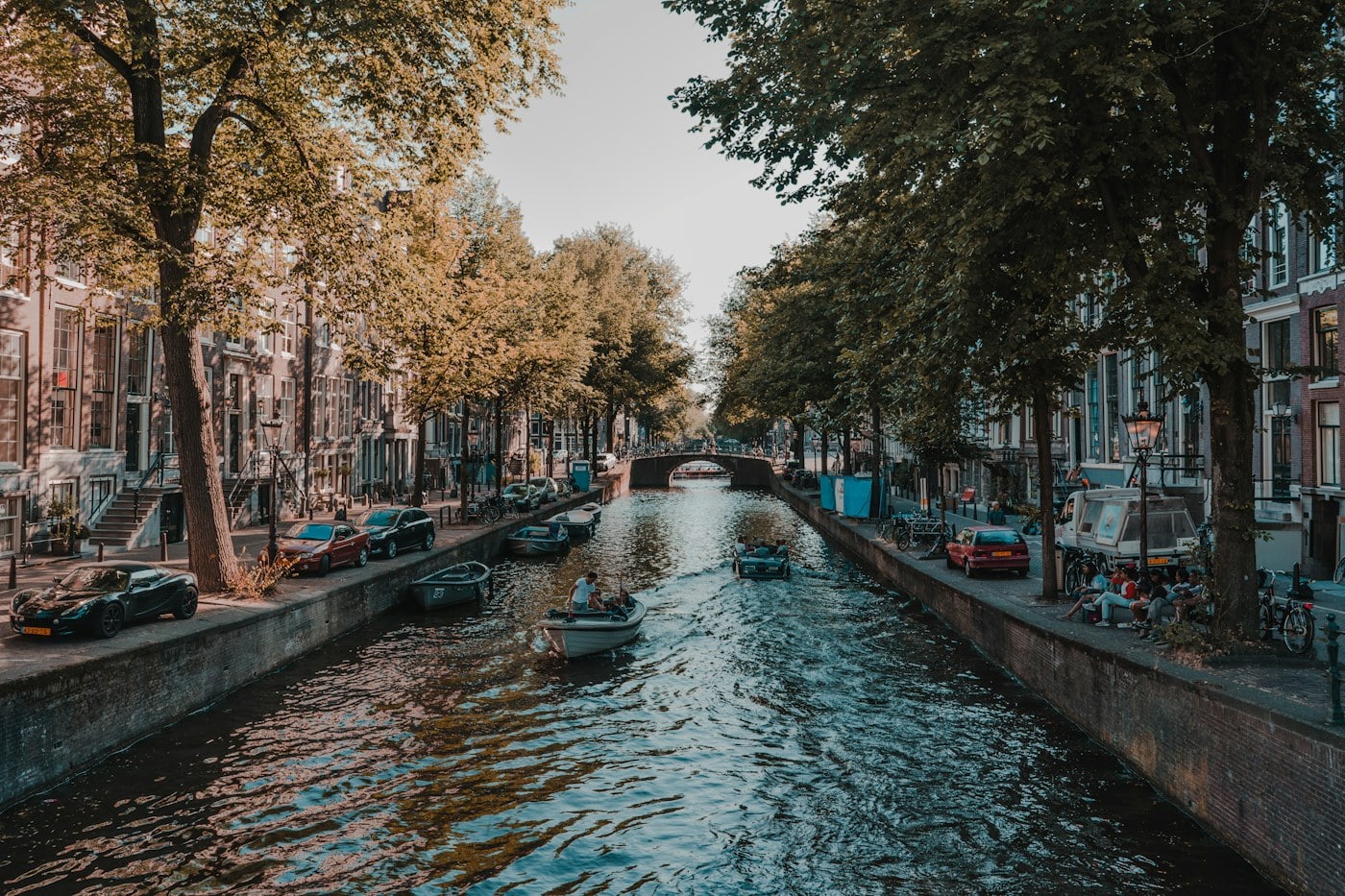
The canal belt’s beauty comes from repetition with small differences: bridge angles, narrow houses, warehouses and the changing relationship between water and street. Look at how entrances work and how buildings adapt to limited frontage. Avoid stopping suddenly in cycle paths to take a photograph. Cyclists are making everyday journeys, and a scenic street remains a transport route. A quiet bench can provide a better viewing point than lingering in the middle of a bridge.
Herengracht, Keizersgracht and Prinsengracht form recognizable parts of the canal belt, but following all three end to end would produce a much larger walk than a casual glance at the map suggests. Choose a few adjacent sections and notice how bridges divide the view. Houseboats, mooring points and delivery activity are part of the waterside setting. Avoid treating a boat’s windows as an invitation to look inside. At crossings, check for cyclists before stepping off the pavement, and do not assume a quiet motor-traffic street is quiet overall. A small loop with one café pause lets the canal architecture remain distinct rather than becoming an endless sequence of similar photographs.
Give one museum a full morning
The Rijksmuseum, Van Gogh Museum and other major collections each support a substantial visit. Choosing one is more useful than squeezing several into a single afternoon. Check the museum’s own information for reservations, access and temporary closures. Decide on a few rooms or themes that interest you, then allow space to discover something unexpected. The visit should end when attention fades rather than after a compulsory attempt to see every gallery.
The Museumplein area makes it easy to combine a major collection with an outdoor interval, but proximity is not a reason to book every nearby museum. The Rijksmuseum’s range is different from a visit focused on Van Gogh, and your interests should determine the choice. Within a large collection, choose a period, medium or room sequence to follow. Stop for a break when your attention begins to blur. If a particular work is essential, confirm its display status through the museum rather than assuming it will always be on view. Leave the rest of the afternoon open enough that a good museum visit can run long without making the next booking stressful.
Use the Jordaan as a neighborhood
The Jordaan’s smaller streets and canals invite a slower walk, but the district is also residential. Keep noise considerate, do not peer into homes and allow residents to move easily around doorways. Shops, cafés and small cultural venues can give the walk structure. Choose a few adjacent streets rather than trying to follow every famous address. Its appeal lies partly in the ordinary scale of the buildings and the way daily routines fit among visitors.
The Jordaan can be combined with the western canal belt, but its smaller streets deserve more than a cut-through on the way to a famous site. A market day, if current arrangements suit your schedule, creates a different atmosphere from a quiet weekday walk. Check the specific market’s information rather than expecting the same activity every morning. If visiting the Anne Frank House is important, treat its official ticket process as a separate planning task and shape the neighborhood time around the confirmed reservation. The area can still be rewarding without that interior visit. A bookstore, café and a few short canals provide a coherent afternoon that does not depend on entering a single building.
Cross to a different side of the city
A ferry journey across the IJ changes the perspective on Amsterdam. Noord contains a mix of residential areas, cultural developments and former industrial spaces, but it is not one compact attraction. Select a particular destination and understand the distances from the ferry. The waterfront itself can be a satisfying outing without a long sequence of stops. Check the current ferry information and stay alert to separate spaces for cyclists and pedestrians while boarding.
Noord’s ferry landings lead to different parts of a district that is much larger than the central canal area. A journey toward the area around the Eye film venue is not the same outing as one to NDSM. Choose according to the cultural stop or waterfront setting that interests you and check the relevant crossing. From the ferry, look back at the central waterfront to understand the width of the IJ. Once ashore, use a map for the actual walking distances rather than assuming every former industrial site is nearby. If you want a relaxed afternoon, one venue and a short waterfront walk are enough. Return before tiredness turns the open distances into a chore.
Let a park carry the afternoon
Vondelpark is a useful green interval near the museum area, while other neighborhoods have parks with a different local feel. Choose the one that fits the day’s geography. A park afternoon can include reading, a simple lunch or an easy walk without requiring an organized activity. Pay attention to designated paths and shared use. It is possible to enjoy Amsterdam’s outdoor life without renting a bicycle or learning unfamiliar traffic habits under pressure.
Vondelpark sits conveniently near the museum district and can be a natural extension after time indoors. Follow a shared path courteously and move aside before stopping to read the map or organize a picnic. Another day, a different park may make more sense for your chosen neighborhood; crossing town just to reach the most famous green space defeats the purpose of a restful interval. Buy food close to where you will eat it and clear everything away afterward. If rain makes sitting outside unappealing, a nearby café can serve the same role in the day. Rest is the objective, so there is no reason to defend the outdoor plan once it ceases to be comfortable.
Keep a rainy-day plan nearby
Amsterdam’s weather can make an exposed canal walk less appealing. Keep one indoor option within reach: a smaller museum, cinema, library or café where lingering is welcome. The alternative should suit your interests rather than exist only as shelter. A rainy window can be a good moment to look through notes and decide which neighborhood deserves a return. Avoid spending the whole day crossing town between indoor stops simply because the original outdoor plan has changed.
A rainy day can support a smaller collection or a film rather than another major museum simply because it is indoors. Choose an option near the neighborhood you already planned to explore. The city’s public library by the central waterfront is another possible setting for a quiet interval, subject to its current visitor arrangements. Avoid assuming that every reading or working space is intended for long tourist stays, and follow house rules. Wet pavements and crowded trams can make repeated transfers less appealing, so consolidate the day geographically. One indoor anchor, a nearby meal and a short walk when the rain eases can be more satisfying than chasing three separate cultural recommendations.
A realistic four-day outline
Use day one for arrival and a small canal loop. Give day two to a museum morning and a park or neighboring district in the afternoon. Spend day three across the IJ or in another area that changes your view of the city. Keep day four for a return to a favorite place and an easy departure. This outline deliberately leaves many spaces unfilled, because opening arrangements, weather and personal energy will supply the details.
Do not move accommodation during a short city stay simply to experience another neighborhood. The time spent checking out, carrying bags and waiting for a second check-in can consume the relaxed afternoon you hoped to gain. Public transport usually makes a second district easier to visit from the same base. If a particular museum is essential, reserve it first and shape the other walks around it. If none is essential, allow the strongest impression from the first day to guide the second. A flexible plan is still a plan when its priorities are clear.
Make the fourth day a return
By the fourth day, familiar streets can become the best part of the visit. Return to a canal corner in different light, revisit a favorite café or explore the next street beyond yesterday’s route. Repetition allows details to emerge without adding distance. Keep the final day light enough for packing and onward travel. Amsterdam’s scale becomes more satisfying when you no longer need to consult the map at every intersection.
On day four, repeat a route that now needs little navigation: a canal loop, the walk to a favorite café or a nearby market street. Familiarity leaves more attention for doorways, reflections and ordinary activity. Keep the final purchase practical if you will carry it through a station or airport. Food, flowers and delicate objects all have different transport limits, and not every appealing souvenir travels well. If departure is late, arrange luggage storage before setting out. A light final day still needs a clear endpoint. Check current service information for the onward connection and choose a last walk that returns naturally to the bags rather than ending across the city.