Mahé beyond the Resort: A Thoughtful Seychelles Island Stay
Mahé has enough variety to support a complete Seychelles visit without a constant sequence of island transfers. Its coast, steep interior, and compact capital create different kinds of days within a relatively small area.
A journey with room to notice
Mahé has enough variety to support a complete Seychelles visit without a constant sequence of island transfers. Its coast, steep interior, and compact capital create different kinds of days within a relatively small area. The island is also a place where people live and work, not simply a background for beaches. A satisfying stay balances shore time with town life and chooses outings according to the actual weather, terrain, and transport available.
Start with the shape of Mahé
Mahé’s mountainous interior means that places close on a map may require a winding journey. Choose accommodation with its local shoreline, services, and transport in mind. A beach-centered stay and a mobile island-exploration stay can both work, but they ask for different arrangements. Decide which matters most before filling the schedule with outings on opposite sides of the island.
Before booking, imagine an ordinary day from the accommodation. Can you reach the shore comfortably, obtain a meal, and return without a complicated transfer? If the main purpose is rest, those details may matter more than proximity to several distant attractions. If you want to explore widely, look at the actual roads and transport available. A small island can still have travel times that shape the day. Choosing a base for the intended rhythm reduces the pressure to keep rearranging plans after arrival.
Spend time in Victoria
Victoria offers a useful introduction to the island’s urban and commercial life. Walk through the center, look at public buildings and market streets, and allow time for a simple meal. Ask before photographing people or stalls at close range. A market is a working environment, and the visit is better when you observe how it functions rather than searching only for a colorful image.
In Victoria, a modest route can include commercial streets, a public square, and a meal without trying to summarize the capital in one visit. Pay attention to where people are working and leave room for ordinary transactions. Market photography is best approached through permission rather than the assumption that a public setting removes all personal boundaries. A closer look at produce or a friendly purchase can be more meaningful than collecting faces. The city offers a useful perspective on the island beyond its visitor-facing shoreline.
Choose a beach for the conditions
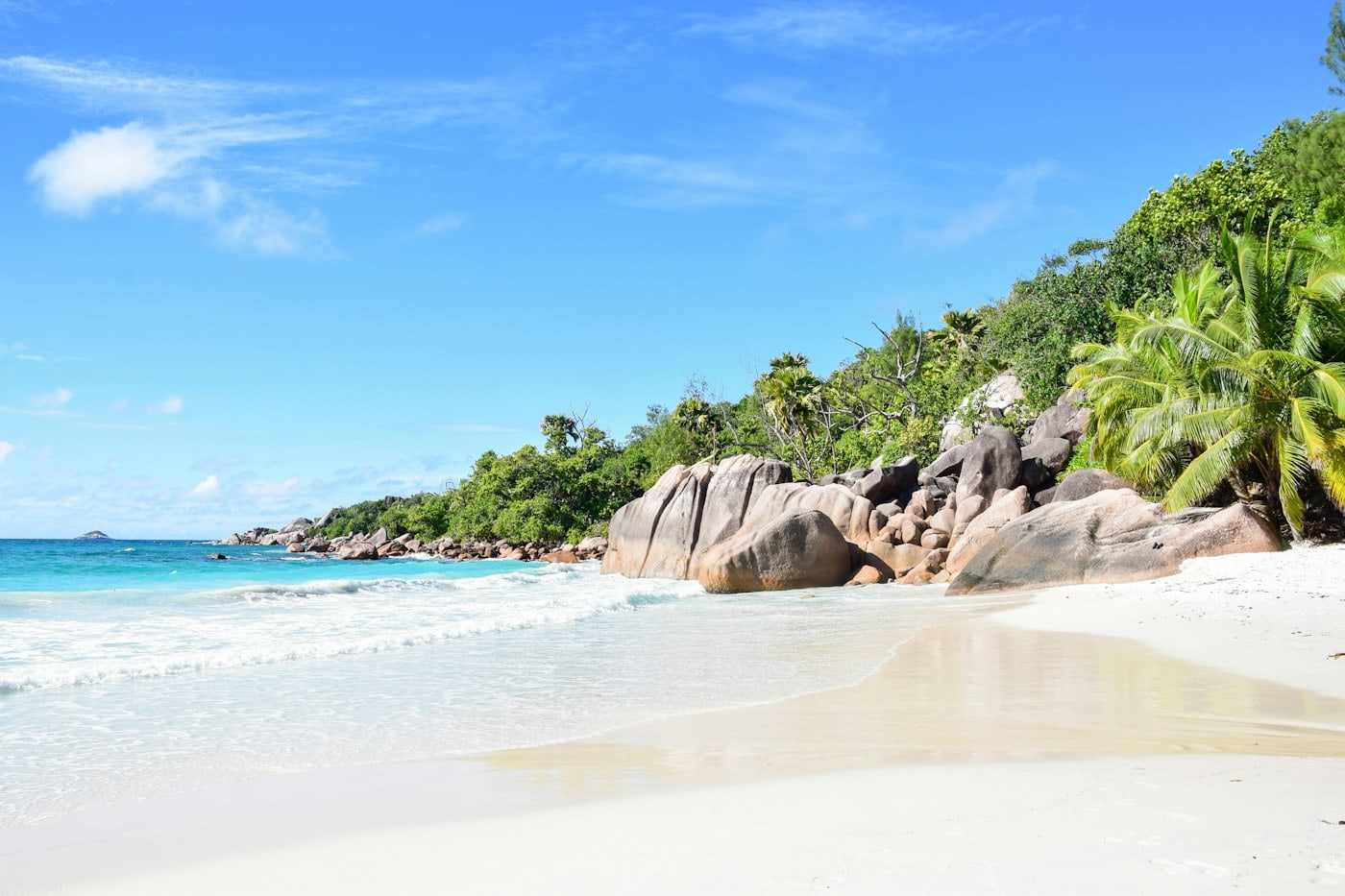
Beau Vallon and other well-known shorelines are not interchangeable on every day. Wind, waves, access, and posted advice matter more than a photograph taken in a different season. Ask locally about suitable conditions and follow official restrictions. A beach can be rewarding as a place to walk or sit even when entering the water is not appropriate.
Ask about the exact beach and the current day, rather than a general claim that a coast is suitable at a certain time of year. Local advice and posted restrictions should determine whether entering the water is appropriate. If not, a shore walk or a meal with a sea view may still provide the experience you wanted from the afternoon. Do not keep driving between beaches solely to avoid accepting the conditions. The most relaxing island day is often the one that changes its plan early and sensibly.
Treat mountain paths as real walks
The interior’s forests and viewpoints offer a striking contrast to the coast, but a trail should be chosen using current official descriptions. Check its terrain, access, and expected conditions, and do not improvise a route through vegetation. If a walk does not fit the day, choose a managed garden or another lower-effort alternative. A viewpoint is a reward for a suitable outing, not a reason to ignore its demands.
A mountain or forest outing should be assessed independently from the island’s relaxed beach image. Read the official route description, check access and weather, and understand the return before beginning. Stay on marked paths and do not extend the walk because a viewpoint appears close through vegetation. If you want a less demanding interior experience, choose a managed visitor place that fits the day. A coherent short outing can still reveal the steepness, vegetation, and contrast that make Mahé more than a coastal destination.
Explore one coast at a time
An island circuit can become a day spent mostly in transport. Instead, choose a limited coastal section with a few sensible stops and enough time for lunch. Look for public access and established parking rather than assuming every gap between buildings leads to the shore. Respect homes, working areas, and paths that are clearly private. A slower route makes those boundaries easier to read.
Group coastal stops by the roads that actually connect them. A viewpoint, a public beach access, and a nearby meal can create an enjoyable half-day without a full island circuit. Look for a proper place to stop rather than pulling over wherever the view improves. If an access appears private or unclear, choose an established public alternative. Moving slowly makes it easier to respect those distinctions and also leaves room to notice the small settlements that would disappear in a hurried drive around the perimeter.
Let Creole food shape an evening
A meal can reveal connections between ingredients, preparation, and island life without requiring a formal food tour. Look at what a kitchen is actually serving and ask about unfamiliar dishes. Fish, rice, pulses, and vegetable preparations may appear in different combinations. Avoid ordering more than you can use, and leave time to enjoy the meal rather than treating dinner as a delay before the next activity.
Food offers a way to give the evening a local focus without adding another excursion. Ask what is being prepared and choose something that suits both appetite and dietary needs. Do not assume an English dish name tells you every ingredient. A considerate question is useful, while a demand for a complicated explanation during a busy service may not be. Sit down with enough time to enjoy the meal, then keep the return simple. The ordinary combination of food and a nearby walk can be a particularly satisfying island memory.
Be selective about another island
Praslin and La Digue are distinct destinations that deserve their own time and logistics. Adding one can be worthwhile, but it is not a requirement for a complete Mahé stay. Check current transport arrangements and build a realistic margin for onward journeys. If the available days are limited, spending them on one island may provide a deeper and more restful experience.
An additional island should have a clear reason in the plan. If you mainly want another beach, compare the transfer effort with an extra quiet day on Mahé. If you want a distinct setting, give the stay enough time that it is not defined by arrival and departure. Verify the actual connection and allow a sensible margin before onward travel. A route becomes stronger when each transfer earns its place through the experience it makes possible, rather than through the number of islands it adds to a list.
Keep a final day near your base
A familiar beach walk, a short town visit, or a relaxed meal can be a satisfying finish. Avoid placing a complicated cross-island outing immediately before departure. The island’s changing light and weather can make a second visit feel new, while staying nearby leaves room for practical preparations. A trip ends more gracefully when its final hours remain part of the holiday.
Keep the final day’s pleasures close enough that practical tasks remain easy. A known shoreline, a favorite meal, or another walk through Victoria can feel more personal than a late attempt to add a distant attraction. You already understand the route and can spend less attention on logistics. Settle the departure arrangements, then let the remaining hours be genuinely open. Mahé’s coast and interior will still contain places you have not seen; leaving them for another visit is compatible with having had a complete and thoughtful stay.
A Mahé itinerary with several centers of attention
Mahé can support a stay that alternates four kinds of experience: a town morning in Victoria, a conditions-appropriate beach day, a suitable interior outing, and a focused exploration of one coastal district. They do not all need equal time, and the weather may change the order. The base should support the parts that matter most to you. If rest by the shore is the main purpose, keep distant excursions selective rather than making every day an island circuit that begins and ends with a substantial journey.
For each outing, settle the exact access and the return. Use current official guidance for forest routes and protected areas, and local posted advice for the shore. If the conditions do not suit the intended activity, choose a different type of day rather than repeatedly moving in search of a way to preserve it. Victoria, a managed visitor place, or a relaxed meal can offer a worthwhile alternative. This is also a reason to keep any transfer to another island separate from the routine flexibility of the Mahé stay.
A final nearby day allows the island to feel familiar. You know the route to a public shore access, understand where to obtain food, and can choose the pace without another round of planning. An earlier walk or meal may become a pleasant return rather than a repeated activity to avoid. The journey does not need to claim the whole Seychelles island group in order to feel complete. A thoughtful stay on Mahé can connect town life, steep wooded ground, coastal settlements, and the ocean within one clear and manageable frame.
Victoria can be a deliberate part of the stay rather than a brief errand between beaches. A compact town morning followed by a meal offers a different perspective on Mahé’s daily life. Give it time on its own terms. The contrast with a later coastal afternoon becomes more meaningful when the capital has been experienced as a working place instead of only a route through traffic.