Marrakech at a Human Pace: Courtyards, Craft Streets, and Quiet Intervals
Marrakech can feel intensely visual on arrival, but a rewarding visit requires more than following the strongest color or busiest street. The medina is a lived-in network of homes, shops, workshops, and routes that take time to learn.
A journey with room to notice
Marrakech can feel intensely visual on arrival, but a rewarding visit requires more than following the strongest color or busiest street. The medina is a lived-in network of homes, shops, workshops, and routes that take time to learn. Courtyards and gardens provide a counterpoint to that movement. A good itinerary alternates the two: a focused walk through working streets, then a place to sit, look carefully, and let the city’s scale become manageable.
Learn one route through the medina
Begin with a simple route between your accommodation and a recognizable public place. Save the location and ask your host about suitable approaches before heading out. Narrow streets carry residents, deliveries, and visitors at once, so step aside when stopping to check directions. Confidence grows from recognizing a few junctions, not from trying to understand the entire medina in one walk.
Ask your accommodation for a clear arrival route and a few useful landmarks, then verify how you will return before setting off. Save practical information so that navigating does not require standing in the middle of a narrow passage. If you want a guided introduction, choose an appropriate established arrangement and clarify what it includes. A simple first walk can be enough. The aim is to make the medina more readable, so later visits to craft streets or cultural places begin with confidence rather than a sense of being continually lost.
Use Jemaa el-Fna as an orientation point
Jemaa el-Fna changes through the day and is best approached with awareness of your surroundings and interests. Observe before committing to an activity or purchase, and ask about any charge in advance when a service is offered. Seek permission before photographing people. The square can be a useful reference point without becoming the center of every meal, walk, and evening.
The square can be experienced in a focused period rather than repeatedly used as the answer to every gap in the day. Decide whether you want to observe the public space, have a meal nearby, or simply use it as a landmark. Be clear about costs before accepting a service, and do not take close photographs of people as though their presence is part of an unrestricted display. Moving calmly and choosing where to pause makes the visit more comfortable than trying to respond to every offer or activity.
Look at craft streets with patience
The souks contain many kinds of goods and work, and not every display represents the same origin or process. Ask what an object is made from and where it was produced. A specialist shop or workshop that welcomes questions can be more informative than a rapid sequence of stalls. Keep entrances clear and remember that observation does not automatically include permission to photograph working people.
A useful craft conversation starts with the object itself. Ask about material, process, and practical use, then listen to the answer without insisting on a particular story. Goods in a market can have varied origins, and visual similarity does not establish that they were made in the same way. If a workshop welcomes visitors, follow the host’s lead about where to stand and what to photograph. The encounter is better when it respects working time rather than treating production as a performance owed to everyone passing through.
Make a courtyard visit its own experience
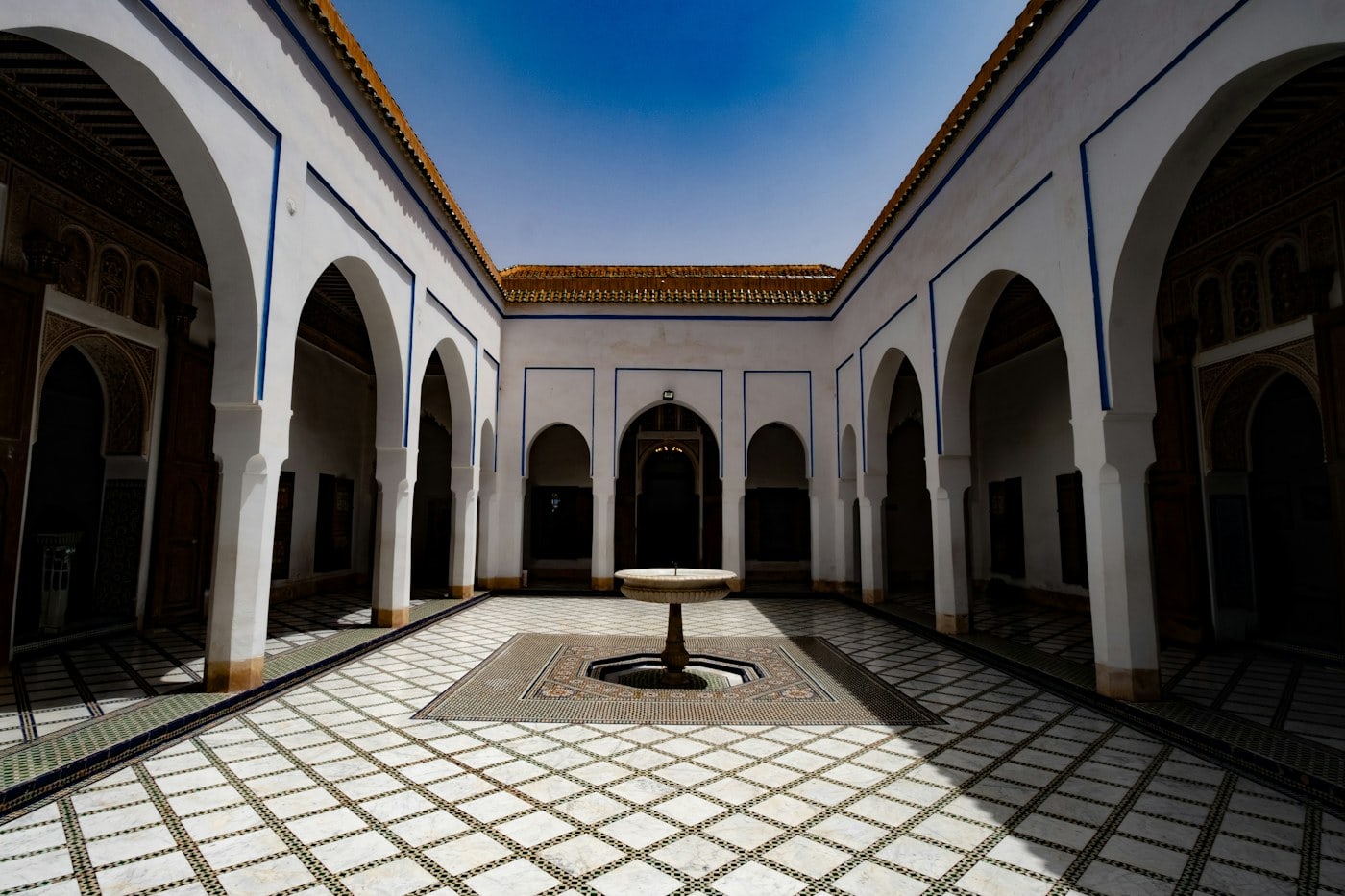
Historic buildings and gardens can offer quiet, shade, and a different understanding of urban space. Choose one officially open place, check current access arrangements, and allow time to look at its layout rather than only its decorative details. Follow photography rules and any restrictions on rooms or passages. A courtyard makes more sense when you notice how it organizes movement, light, and privacy.
Look beyond surface decoration in a courtyard. Where does a passage lead, how is shade created, and what spaces are open or enclosed? These questions can make a visit richer than simply recognizing a patterned wall. Read the interpretation available and distinguish what is known about the building from a general impression of its atmosphere. Keep to the visitor route and respect photography restrictions. A smaller number of cultural stops with time to observe can provide more understanding than moving rapidly between several interiors that begin to blur together.
Let lunch slow the day down
A relaxed meal can reset the pace after a busy market walk. Choose somewhere that fits your route and read the menu rather than assuming every restaurant prepares the same dishes. Tagines, couscous, salads, and breads appear in varied forms and combinations. Ask about ingredients that matter to you, order a manageable amount, and leave room for the meal to be an experience rather than another task.
Choose lunch before exhaustion turns it into an urgent search. A place on a sensible route, with a clear menu and a comfortable setting, may suit the day better than a distant recommendation. Ask about ingredients when needed and confirm arrangements before ordering. The meal is also an opportunity to sit still and decide whether the afternoon needs another busy walk or a quieter cultural stop. Food belongs to the rhythm of the visit; it does not need to become a separate contest to identify the most definitive dish or address.
Give gardens a clear place in the plan
A garden visit should be chosen for the time you want to spend there, not added automatically because a photograph is familiar. Check the exact location, current ticket arrangements, and the journey from your base. A garden outside the medina may require a separate transport plan. Group it with nearby interests rather than repeatedly crossing the city between unrelated appointments.
A garden outside the immediate medina route deserves a coherent plan. Confirm its current visitor arrangements directly, understand the journey, and avoid placing another fixed appointment too close afterward. Once inside, allow time to look at planting, shade, and the way paths organize movement rather than concentrating only on the most photographed corner. If the available time is short, choose one garden carefully instead of assuming several will add proportionate value. A quiet interval is most effective when it remains quiet in the schedule as well as on the ground.
Buy fewer objects with better questions
Ask about material, dimensions, care, and transport before purchasing a craft object. If bargaining is appropriate, keep it polite and be prepared to decline without turning the exchange into a contest. Do not begin a long negotiation for entertainment. A purchase is more satisfying when you understand what you are taking home and can carry it without damage or last-minute complications.
Decide what you would actually use before entering a long buying conversation. Dimensions, packing, and care can matter more at home than the excitement of a display. If a price does not suit you, decline politely and move on rather than trying to turn the interaction into a victory. Ask before photographing goods or people, especially in a small shop. The purchase should feel clear and voluntary on both sides. Carrying one understood object home is often more satisfying than a hurried assortment acquired under the pressure of the final day.
Return to a quiet familiar corner
A final evening does not need another ambitious crossing of the medina. Choose a known route, a comfortable place to eat, and time to organize departure. Familiarity allows you to notice details that the first busy walk concealed: a doorway, a pattern of shade, the practical use of a small square. The city becomes more memorable when the visit contains moments of recognition as well as surprise.
A known route can reveal a calmer city because the practical uncertainty has diminished. You notice how a doorway catches light or how a small public space is used, while still respecting the privacy of the homes around it. Choose a final meal that allows an easy return and settle departure details before the evening begins. The last hours do not need to contain another major attraction. A familiar corner, understood a little better than on arrival, can provide a more thoughtful ending than one more ambitious journey through streets you have no time to learn.
A daily rhythm of movement and pause
A manageable Marrakech day can begin with a focused medina walk, continue to one cultural courtyard or garden, and pause for an unhurried meal. The afternoon can remain simpler rather than repeating the same level of intensity. Learn the basic route from the accommodation and use recognizable public landmarks. If choosing a guided introduction, clarify the arrangement and interests beforehand. The purpose is to make later independent time more comfortable, not to collect every possible craft street and historic interior in a single first outing.
Keep cross-city visits in sensible geographic groups. A garden outside the medina may require transport and current ticket arrangements, while a central craft walk may be easiest on foot. Check each place directly and avoid allowing a short list of famous photographs to dictate repeated journeys back and forth. At markets and workshops, ask about costs and permission before accepting services or taking close pictures. A clear, considerate exchange is more useful than a hurried interaction shaped by uncertainty about what is being offered or expected.
Use the last evening to return to a known route and a comfortable table. Pack purchases with enough time to handle their actual dimensions and care needs, then leave room for a short walk without another objective. Marrakech becomes more approachable as the streets acquire context and familiarity. The visit can end with a small detail understood better than before: how a courtyard creates shade, how a material is used, or how a local street changes through the day. Those observations give the journey a human scale that a longer list of attractions cannot supply.