Tbilisi Through Bread, Courtyards and Shared Tables
Explore the Georgian capital with a compact neighborhood plan and a thoughtful appetite for bread, dumplings and everyday streets.
Start beside the river, then climb slowly
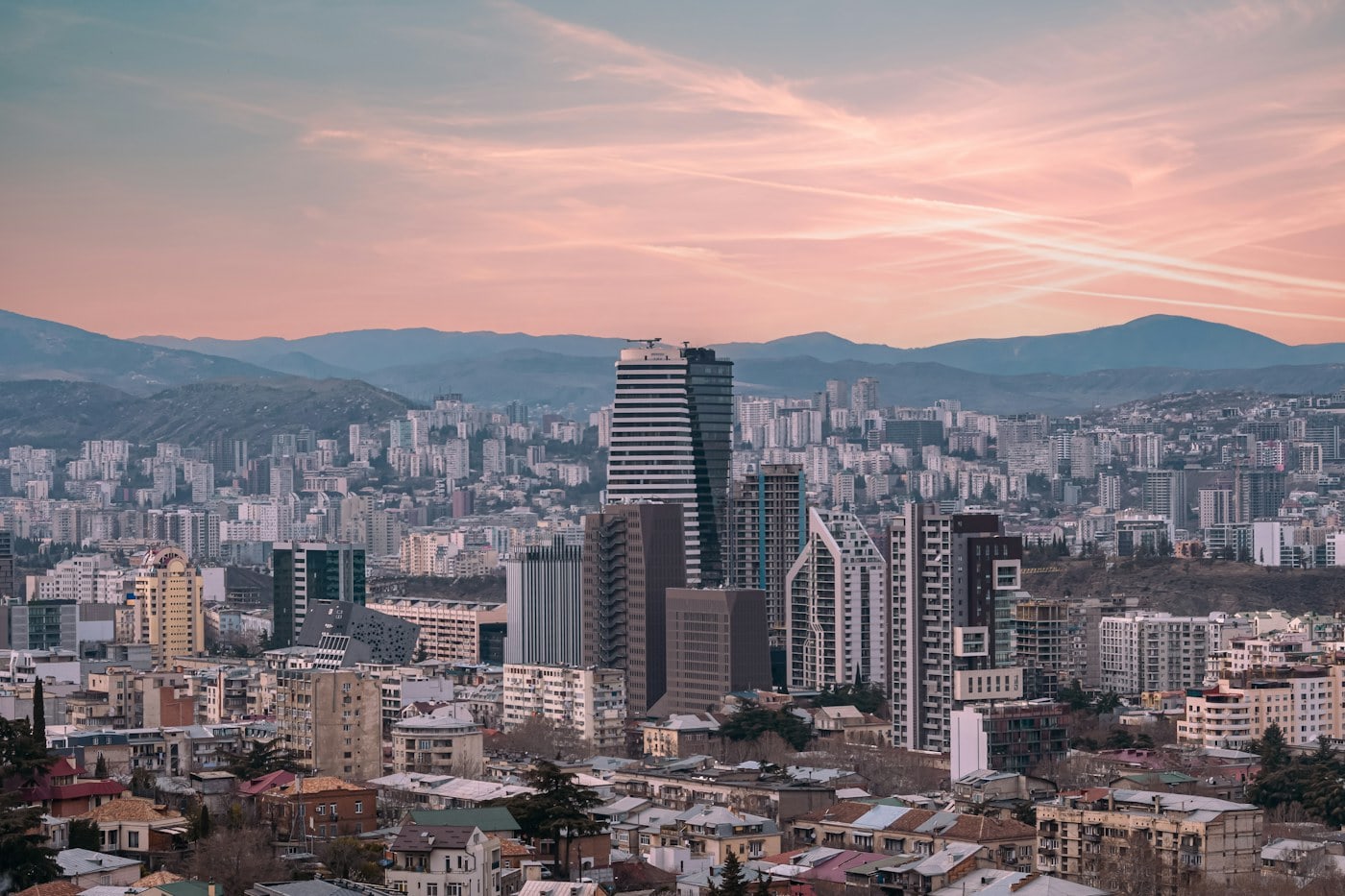
Tbilisi follows the Mtkvari River, with hills and ridges shaping neighborhoods on both sides. The old town’s lanes look compact on a map, but gradients and uneven surfaces give short walks substance. Begin with the river as a reference, then choose one slope to explore. A view across the roofs is more satisfying when you can connect it to streets you have already walked. Avoid making every climb part of the first afternoon.
The area around Metekhi offers a useful view back toward the old town, with the river separating distinct slopes and building clusters. Crossing the bridge makes more sense once you have identified the bank on which your accommodation lies. From the old-town side, a walk toward the bath district can remain compact; extending upward toward a ridge changes the outing considerably. Avoid combining every viewpoint on the first day. The streets near the river can be busy with vehicles even where the architecture invites slow looking. Find a safe place to stop, orient yourself using the bridge and ridge lines, then choose the next small section rather than navigating continuously while walking.
Follow the smell of bread without creating a spectacle
Georgian bread baked in a tone oven is an everyday purchase, and a small bakery can offer a direct introduction to the city’s food habits. Shapes and names vary; ask what has just come out rather than insisting on a particular item. An oven is a working space, not a demonstration arranged for visitors. Buy something before lingering with questions, stay clear of the baker’s movements and let regular customers place their orders.
Shotis puri is among the recognizable breads associated with a tone oven, though the bakery may offer several shapes or batches. Its crisp exterior and warm interior are best appreciated soon after purchase. A whole loaf can be more than one person needs if a restaurant lunch is imminent, so share it or build the next meal around it. Bread bought from a small bakery pairs naturally with simple provisions rather than requiring another formal tasting experience. Watch how staff pass loaves from the oven area to the counter and keep your hands clear. If you want to photograph the process, ask at a quiet moment and accept a refusal without trying another angle.
Learn the difference between generous and excessive
Georgian restaurant menus encourage sharing, but their abundance can lead visitors to order far too much. Khinkali, khachapuri, bean dishes and vegetable preparations each deserve attention. Regional variations matter, so read descriptions rather than treating the dishes as fixed objects. Ask how many dumplings make a sensible order for your table. A second round can be added if needed, and fewer dishes make it easier to notice seasoning, dough and texture.
Khachapuri covers several regional forms rather than one standard cheese bread. An Adjarian version, for example, has a different shape and eating experience from an Imeretian round. The portion can be substantial, so ordering two types alongside several other dishes may overwhelm a small table. Khinkali also deserve a little attention to handling because broth may be held inside. Let the dumplings cool enough to eat comfortably and ask staff if you are unsure of the house’s preparation. Bean dishes and vegetable plates can create contrast, while walnut-based sauces add another common ingredient to check for dietary needs. Order with those contrasts in mind instead of building the table solely around starch and cheese.
Treat courtyards as inhabited places
Timber balconies and layered courtyards are among the old town’s most photographed features. They are also part of people’s homes, sometimes in buildings that need sensitive maintenance. An open gate is not a blanket invitation to enter. Appreciate what can be seen from public streets and seek permission where access is clearly personal. The appeal lies in the relationship between private rooms and shared space; preserving that boundary is part of understanding the architecture.
The balconies often seen in photographs form part of a shared circulation system, connecting rooms and households around an interior space. That architectural function is different from an ornamental balcony facing a public square. Entering to obtain the familiar view can mean stepping directly into a resident’s everyday route. Publicly accessible cultural venues and courtyard businesses offer a better way to experience the form without crossing a private boundary. Look at how shade, stairs and covered galleries work together. If a venue welcomes visitors, a purchase or admission may support its operation, but it still does not extend access to adjacent homes. Stay within the area the staff identify as open.
Give Sololaki its own walk
Sololaki offers another architectural rhythm, with nineteenth- and early twentieth-century apartment houses, staircases and streets climbing away from the center. Facades reward attention to small details: ironwork, door frames and the proportions of windows. Some interiors remain private, and beautiful decay should not be romanticized at the expense of residents. Pair a street walk with a café or bookshop rather than searching for every staircase you have seen online.
Sololaki can be explored from streets near Freedom Square, but the slopes become more noticeable as you move farther into the district. Build a walk around a few blocks and allow yourself to turn back before the climb ceases to be enjoyable. The architectural interest is often in ensembles rather than a single famous building: one entrance, an iron balcony and a line of windows can show the ambitions of a changing city. Restoration and deterioration may stand close together. Avoid describing this only as charming decay; building condition affects the people who live there. A café on a public street is a better rest point than lingering in a residential entrance hall.
Use a market visit to ask better questions
Dezerter Bazaar and other food markets show the city’s supply side, beyond the restaurant table. Produce, herbs, pickles and churchkhela can prompt useful questions about how food is eaten or stored. Do not assume every stall sells products made by the vendor. Ask before photographing people and avoid obstructing narrow aisles. If you buy food for a later journey, think about heat, packaging and the rules at your destination before making a large purchase.
Dezerter Bazaar lies outside the compact old-town walking circuit, so allow for the journey as well as the visit. Its association with the railway-station area gives the outing a different urban setting. Take only the cash and bags you need, keep belongings secure and choose purchases you can carry without difficulty. Herbs and spices may be easier to manage during a city stay than delicate produce, while churchkhela can vary in nuts, coating and texture. Ask what you are buying rather than relying on the familiar candle-like shape. If you want to taste several things, buy small amounts over the course of the visit instead of accumulating a large bag at the first stall.
Approach the bath district with clear expectations
Abanotubani’s brick domes and setting make the bath district distinctive even for travelers who do not book a bath. If you do want the bathing experience, compare establishments and understand what is included, whether facilities are private or shared, and how reservations work. Avoid treating it as an essential authenticity test. A walk through the district and a quiet meal nearby can be equally worthwhile when a bath does not suit your preferences.
The sulfur-bath district sits where the city’s topography tightens around a small stream valley. Its brick domes belong to the bathing architecture rather than a row of freestanding monuments. Walk the public area first to understand the setting, then attend any booked bath at the agreed time. A bath reservation may involve a room, attendants or additional treatments that are priced or organized separately, so ask before arrival. If you are interested mainly in architecture, there is no need to book a service for access to the neighborhood. A short walk followed by a meal can fit naturally with an old-town day without turning relaxation into another complicated appointment.
A base that supports the walking
Choose a Tbilisi address by its actual street and gradient, not only by the appeal of a balcony photograph. A place uphill from the old town may be atmospheric yet involve a demanding final climb after dinner. Ask about steps inside the building and vehicle access if either matters. Staying near a useful transport connection can make a neighborhood beyond the most photographed center equally convenient.
Three full days allow a comfortable pattern: the river and old town first, Sololaki and a market second, and a contemporary cultural stop or additional neighborhood on the third. Do not allocate all the eating to the end of long walks. A proper lunch can divide the day and make the afternoon more enjoyable. Carry only what you need, since changing surfaces and slopes become less pleasant with a heavy bag. When a café or restaurant is especially helpful, note its location; a reliable place to sit can make an unfamiliar city feel considerably easier.
Leave room for contemporary Tbilisi
The city extends beyond atmospheric lanes and traditional dishes. Galleries, design shops and ordinary cafés show how people use and reinterpret the capital today. Cross the river for a different neighborhood rather than staying inside a single old-town circuit. A modest visit to one contemporary space can complicate a simplistic image of Tbilisi as an unchanging place. End the trip with that fuller picture: bread ovens and modern studios belong to the same living city.
Across the river, Marjanishvili and neighboring streets offer a useful counterpoint to the older visitor circuit. Choose a gallery, design venue or café that is actually open, then leave time for the surrounding blocks. The purpose is not to find a supposedly undiscovered city but to recognize that contemporary work and everyday residential life continue beyond the most familiar views. Transport can make the crossing easier if you have already spent the morning climbing. A longer stay might devote separate afternoons to old and new cultural venues, allowing each to stand on its own terms. This creates a fuller picture than treating modern Tbilisi as a brief epilogue after the traditional sights.