San Sebastián Beyond the First Pintxo
A measured route through the Basque city’s counters, beaches and neighborhood streets, with room to enjoy each stop.
Understand the city before the bar crawl
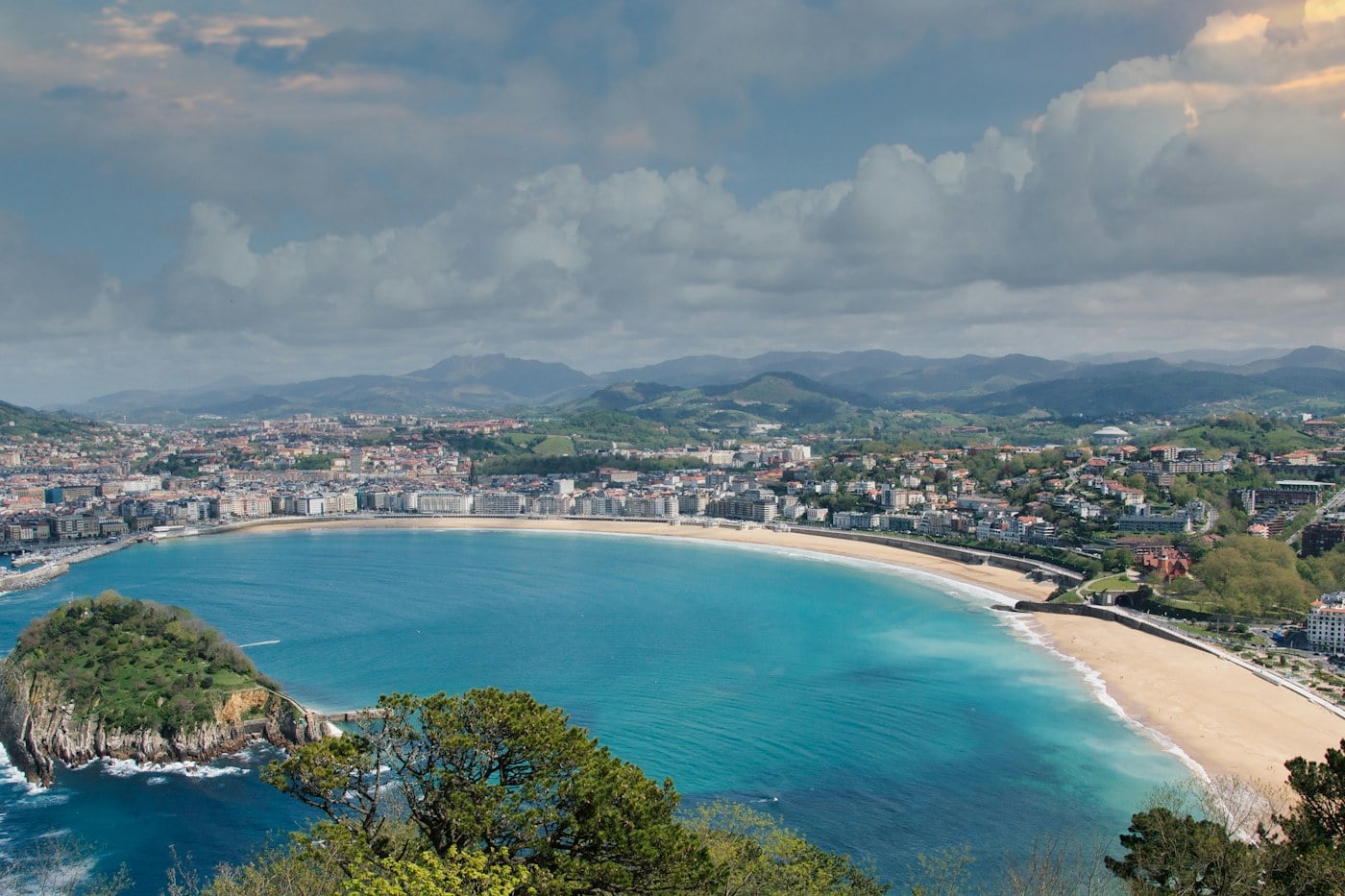
San Sebastián, also known by its Basque name Donostia, curves around La Concha Bay and extends across the Urumea River toward Gros. The Parte Vieja sits near the bay’s eastern end beneath Mount Urgull. Begin with a walk along the waterfront to see how these pieces fit together. The city’s compact center can encourage constant restaurant hopping, but the promenade and beaches are an essential part of its daily rhythm.
The bay walk from the old-town end toward La Concha gives a clear sequence of beach, promenade and city blocks. The Urumea’s mouth marks a separate edge, with bridges leading toward Gros. These relationships matter when choosing accommodation: an address convenient for the old town is not identical to one beside Zurriola, although both can support a walkable stay. Begin by locating your bridge or bay-side route home. The central area is compact enough that a short orientation walk can prevent repeated map checks later. If the weather is unsettled, keep the circuit near cafés and public transport rather than committing immediately to the full length of the waterfront.
Choose a pintxo with intention
A pintxo is more than a miniature dish to collect in large numbers. At a crowded counter, take a moment to understand what is displayed and what should be ordered hot. House specialties may be listed separately from the food on the bar. Ask how ordering and payment work before helping yourself. One considered choice at each stop allows you to notice contrasts in texture and preparation without turning the evening into a competition.
A gilda offers a concise example of a pintxo whose effect comes from the combination of a few ingredients rather than elaborate presentation. Other counters specialize in hot preparations that will not be obvious from the display. Look for a written menu and ask about the house specialty before assuming everything available is already on the bar. A familiar ingredient may arrive in a distinctly different form at the next venue, making comparison more interesting than variety for its own sake. Payment practices can vary with service style and crowding. Clarify the process early, keep track of your orders and do not leave a half-finished plate where it prevents someone else from using the counter.
Let the old town breathe between stops
The Parte Vieja has enough churches, squares and side streets to occupy the time between meals. Plaza de la Constitución provides a useful pause, with its regular balconies contrasting with the narrower approaches. Walk away from the busiest restaurant corners and observe how the district changes. Shopping and residential doorways remain part of the same streets. A food-focused visit becomes more interesting when it includes these intervals rather than a continuous sequence of plates.
From Plaza de la Constitución, nearby streets lead toward the church of San Vicente and the routes climbing Urgull. Another direction brings you toward the harbor edge. These are useful short walks between food stops because they do not require leaving the district and returning through traffic. Choose one small cultural interior if you want more historical context, but check its visitor arrangements. The old town’s ground floors can make the whole area appear devoted to hospitality; looking above them reveals residential windows and the ordinary scale of the quarter. That is a reason to keep late-night conversation considerate, particularly when leaving a busy bar for a quieter lane.
Cross into Gros for a different day
Across the Urumea, Gros opens toward Zurriola Beach and a different set of residential streets, cafés and food businesses. The beach is associated with surfing, but watching the water from land is enough to appreciate its character. Sea conditions deserve respect, and a lively beach scene does not make every patch of water suitable for swimming. Combine a neighborhood breakfast with the waterfront rather than treating Gros as an extra bar district to check off.
Gros works especially well as a morning rather than only an evening destination. Cross a bridge over the Urumea, choose breakfast on a neighborhood street and continue toward Zurriola. The beach’s open exposure creates a different atmosphere from the curve of La Concha. If wind makes the promenade less comfortable, turn inland rather than pursuing a complete beach walk. A bakery, bookshop or neighborhood café can give the morning a focus without a timed ticket. For visitors interested in surfing, proper local instruction and current conditions matter more than the appearance of other people in the water. Watching from the shore remains a worthwhile part of the setting.
Make one meal a seated occasion
Counter eating is sociable and flexible, but a seated meal offers a different understanding of Basque cooking. Consider a restaurant where you can follow a menu from beginning to end and ask about seasonal ingredients. Seafood, vegetables and familiar staples may be treated with great precision without elaborate presentation. Read the menu first and be realistic about your appetite. A long lunch can replace, rather than precede, an ambitious evening of food stops.
A seated lunch can be the main food experience of the day, leaving the evening for a short walk and something simple. This is useful when you want to understand a kitchen’s treatment of fish, vegetables or a seasonal menu without the interruptions of moving between bars. Tell the restaurant about important dietary requirements before reserving, especially if the menu is fixed or concentrated around seafood. Do not assume a tasting format is necessary for a serious meal. A small à la carte choice can be more comfortable and leave you attentive to the food. Check the location as well as the menu so the return does not require a long journey after a substantial lunch.
Use the hills to see the bay
Mount Urgull offers paths above the old town, while Monte Igueldo frames the other end of the bay. They are separate outings with different access and attractions. Pick one rather than chasing every elevated view. The pleasure is partly in seeing the shape of streets and beaches you have already used. Gradients, steps and exposed stretches can affect comfort, so choose a route that suits the group and current weather.
Urgull is the more natural companion to an old-town day because its paths begin close to that district. Igueldo belongs to the other end of the bay and should be planned around its current access arrangements. Choosing one allows time to understand the view rather than collecting both in quick succession. At Urgull, different paths may involve steps or gradients, so follow a suitable signed route rather than an apparently shorter track. The reward is not only the photograph of La Concha: looking back toward the river and harbor also clarifies the city’s shape. Descend while you still have time for a relaxed break before the next meal.
Shop for a picnic without making it complicated
A picnic can provide a welcome change from restaurant tables. Choose food that travels well, buy only what you can carry comfortably and use an appropriate public place. The point is to enjoy the city’s setting, not to recreate a full tasting menu on a bench. Keep packaging under control and take waste away. A simple sandwich or fruit can leave more attention for the light on La Concha than an overambitious collection of delicacies.
For an uncomplicated outdoor lunch, buy food near the area where you expect to eat rather than carrying it through several hours of sightseeing. A bakery purchase and fruit can be enough, especially if a restaurant meal is planned later. Choose a bench or permitted picnic spot that does not obstruct a beach access or walking route. Keep an eye on gulls and secure wrappers before opening them in wind. If the day turns wet, a café meal is a more sensible substitute than insisting on the picnic. The point is to create a different meal rhythm and enjoy the setting, not to prove that every lunch can be eaten beside the water.
Three evenings, three different meals
With three evenings in San Sebastián, make one a small pintxo circuit, one a seated restaurant meal and one a flexible return to a favorite. This avoids the sense that every night must follow the same increasingly ambitious route. Give each evening a nearby daytime setting: the old town, Gros or a bay-side walk. You will spend less time crossing the center simply to eat.
For companions who enjoy different foods, a counter meal provides flexibility, but discuss how many stops feel comfortable before setting out. It is easy for one person to be ready for dinner while another is still treating the outing as a snack tour. Agree on a shared endpoint and leave room to stop earlier. Keep a note of the places you particularly liked, including whether you ordered from the display or the kitchen. That small distinction can be surprisingly useful when you return and want to repeat a good experience without deciphering the whole counter again.
Finish with a short list of favorites
Food memory improves when there is space to compare. At the end of the stay, identify the pintxo you would order again, the neighborhood you enjoyed most and the route that felt effortless. Return to one favorite rather than spending the final evening pursuing every recommendation you missed. San Sebastián supports both careful dining and the simple pleasure of a sea-front walk. A balanced visit should leave enough energy to enjoy both.
A return visit to a bar is easier when you remember whether its appeal lay in a particular hot dish, the display or simply a welcoming place to stand. Go back at a time that suits the experience you want. A quieter counter permits questions; a lively one offers atmosphere but demands more decisive ordering. On the final day, choose between another pintxo meal and a longer waterfront walk rather than forcing both into a narrow departure window. If you have luggage, settle storage first. The old town’s compactness can make last-minute detours look harmless, yet service and queues still take real time. Keep the final route close to your onward connection.