Norway on Foot: Finding a Gentler Rhythm beside the Fjords
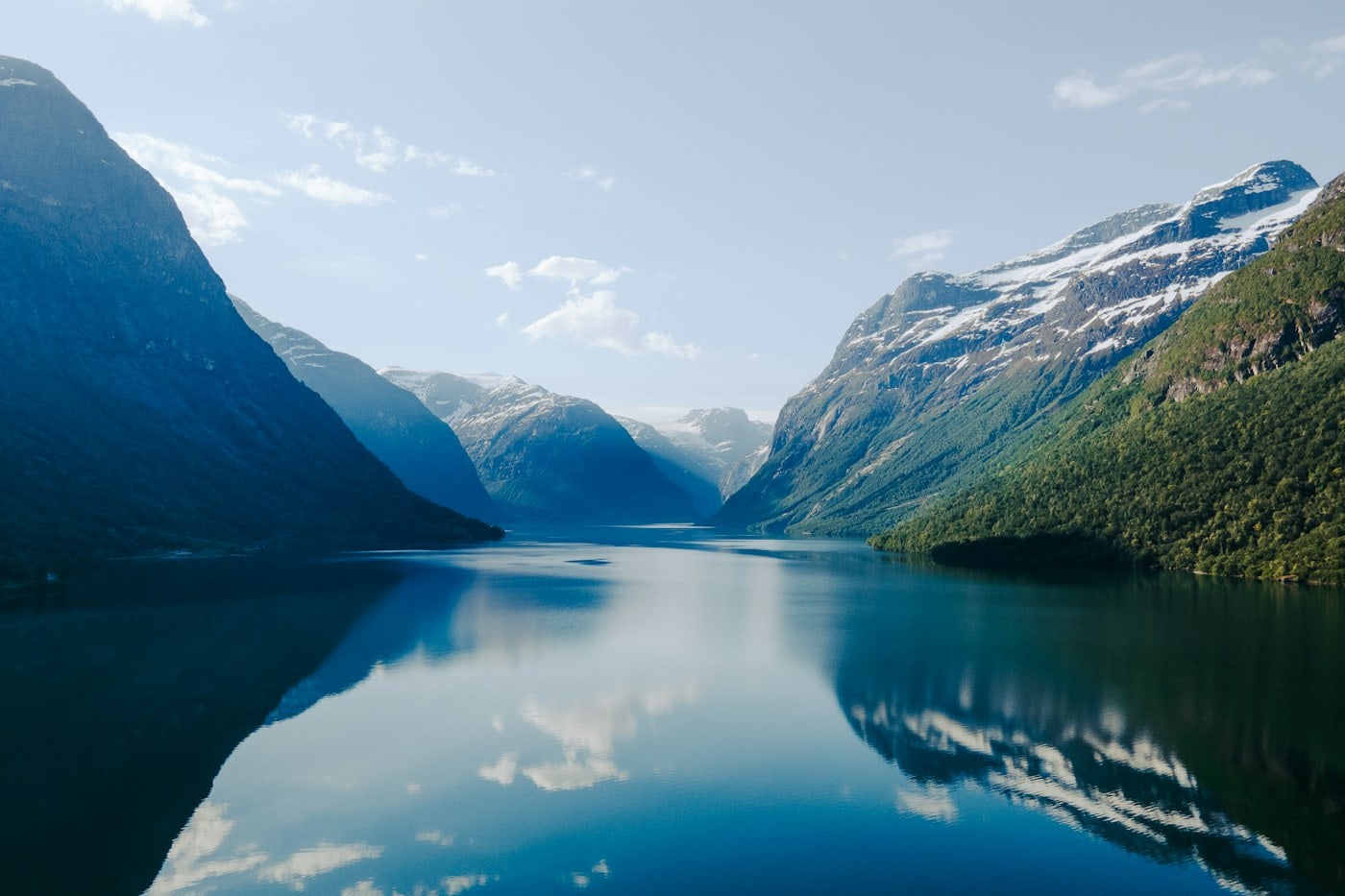
A fjord is more than the view from its highest lookout. It is also a shoreline road, an orchard above the water, a ferry crossing, and the modest path that links a village to the slope behind it.
A journey with room to notice
A fjord is more than the view from its highest lookout. It is also a shoreline road, an orchard above the water, a ferry crossing, and the modest path that links a village to the slope behind it. Western Norway offers celebrated mountain walks, but an enjoyable visit does not have to revolve around a single demanding climb. Choosing walks that fit the weather and your actual experience leaves more room for the region itself.
Choose a fjord region before choosing a trail
Hardangerfjord, Sognefjord, and the smaller fjord arms within their wider regions are not interchangeable day-trip destinations. Pick a base according to the kind of walking you want and the transport you intend to use. A waterfront village can make gentle outings easy while placing a distant mountain trail beyond a sensible day. Start with geography and travel time rather than a collection of unrelated famous viewpoints.
A single base should be tested against a sample day. Work out how you would reach the trailhead, return after the walk, and obtain food without relying on a chain of convenient connections. If every attractive route requires a lengthy drive, another village may fit better. If you are traveling without a car, look especially closely at the transport that actually serves the place. A beautiful waterfront address is not automatically a practical walking base, while a modest village can be excellent when the routes begin nearby.
Let a waterfront walk be enough
A short walk beside the water can reveal the vertical scale of a fjord more clearly than a hurried ascent. Look for officially described local paths and public waterfronts, paying attention to where roads narrow or private land begins. The most rewarding hour may include a jetty, a village shop, and a quiet view across to farms on the opposite slope.
Low-level walks also offer a chance to understand settlement. Notice where houses stand above the water, how small roads negotiate the slope, and where ferries or boats connect the opposite shore. These details explain why a fjord is a route as well as an obstacle. Do not wander down a private landing to improve the view. Public spaces can provide plenty to observe, particularly when you stop expecting each outing to culminate in a single dramatic photograph from high ground.
Make ferries part of the experience
Ferries connect communities across water that would otherwise require substantial detours. A crossing also changes the perspective: a valley mouth or waterfall that was almost invisible from the road becomes legible from the deck. Check the exact route and current timetable, distinguish car ferries from passenger services, and leave room for connections. Treat the journey as time in the landscape, rather than time lost between walks.
Before a ferry day, note whether the service is part of a continuous onward route or a crossing you will simply reverse. That distinction changes how much time can be spent on the far shore. Keep the operator’s current information accessible and identify the actual boarding point. On deck, stand where passengers are allowed and keep clear of working areas. The most revealing view may be behind you as the shore recedes, so allow yourself to look in more than one direction.
Read a trail description closely
A distance figure cannot describe steepness, loose ground, exposure, or the effect of rain. Look at the official trail description, elevation change, seasonal advice, and the route back to the start. Famous walks should not be chosen simply because their photographs are familiar. Match the outing to the least experienced person in the group and be willing to turn around before reaching the advertised viewpoint.
Look for a route description that explains the ground, not merely a headline distance. Wet rock, roots, steep steps, and the absence of an easy exit can all change the nature of a walk. Check whether the route is circular or returns the same way, and make the turnaround decision before fatigue becomes the deciding factor. A marked path still requires judgment. Being able to describe why a walk suits your group is more useful than recognizing the name of its viewpoint.
Notice the orchard landscapes
Parts of Hardanger are known for fruit growing, and the cultivated slopes provide a different way of understanding fjord country. An orchard village is a working place, so keep to public routes and ask before entering fields or photographing people at work. Shops or farms that explicitly welcome visitors offer better opportunities than wandering through a production area because it looks picturesque.
A cultivated fjord slope helps challenge the idea that this is untouched scenery. Fruit growing depends on labor, access, and a particular local environment. Public interpretation or a visit to a welcoming producer can connect the view with that work. Keep gates and access lanes clear, avoid picking anything without permission, and do not enter rows because other visitors have done so. The landscape is attractive partly because it continues to be used, rather than because it exists as a display for travelers.
Keep a wet-weather version of the day
Weather can obscure a mountain panorama without making the entire day useless. A shorter village walk, a local museum, a café, or a ferry journey may fit conditions better than a high trail. Decide on that alternative before leaving your base. Being flexible is easier when the substitute is something you actually want to do, not a punishment for missing a summit.
Make the alternative day specific enough to be appealing: which village, which museum, which crossing, and what simple walk links them. Check that the plan does not require the same conditions as the original mountain outing. A drive to another exposed viewpoint is not much of an alternative to a clouded-in trail. If the forecast changes again, you can reassess, but there is no need to keep chasing a perfect panorama around the region at the expense of a comfortable day.
Plan food around the walk
Village services can be spread out, and a route may not pass a shop even when it looks close to settlements on a map. Arrange food and water before beginning, and carry your rubbish back. If a café is a hoped-for finish, verify that it is operating rather than organizing the whole day around an assumption. A relaxed meal is a better ending when nobody depends on it for the basics.
Separate the pleasure of a meal from the essentials carried for a walk. A hoped-for bakery or café can be a fine beginning or ending, but its closure should not leave the group without what it needs. Use the previous evening to understand local shopping options and arrange provisions. After the walk, a simple meal near the base often works better than another drive. It gives the day a clear finish and leaves time to review the conditions for the next outing.
Stay long enough to learn the local light
Two or three outings from the same base can be more satisfying than moving accommodation every night. You begin to recognize the mountain across the water, understand the route to the ferry, and notice how cloud alters the same scene. A longer stay also gives you a better chance to choose a suitable day for the more ambitious walk without treating poor weather as a crisis.
With repeated mornings in one place, the fjord becomes less abstract. You recognize a ferry’s route, the opening of a side valley, and the patch of cultivated land beneath a cliff. Those landmarks can make even a quiet day satisfying. Consider keeping the final afternoon close to the base rather than using it to stretch the trip farther. A second view of a familiar shore often contains more meaning than a first hurried look at a distant destination you have no time to understand.
Three different ways to see one fjord
A well-paced fjord stay can combine three perspectives without moving accommodation repeatedly. Begin at water level with a village and shoreline walk. Use another day for a crossing that shows the same slopes from the fjord itself. Choose a marked higher walk only when its demands and the actual conditions fit. These are not lesser and greater versions of one experience. They reveal different relationships between settlement, water, cultivation, and mountain ground, and each can remain worthwhile even when the others are unavailable.
If you have several days, avoid assigning the most demanding walk to an inflexible date before you know the forecast. Keep its practical arrangements understood, then use the available window responsibly. The lower-level days should remain attractive in their own right: an orchard village in Hardanger, a local museum, or a ferry-linked walk with a comfortable return. A plan that depends on one perfect mountain morning is vulnerable to disappointment, while a plan with several ways of engaging with the landscape can absorb ordinary changes in weather.
For the final route check, look at the practical end of each day. Is the return transport clear? Can you obtain food without another long journey? Does the base allow a quiet evening after the walk? Those questions are more useful than adding another viewpoint to the list. Western Norway becomes more memorable when the days differ in effort and perspective. The fjord seen from a village bench, the same slope from a ferry deck, and the wider shape from a suitable path can form a coherent story of one region.
Keep the map at a regional scale when comparing bases. An opposite shore may look close yet require a particular ferry or a lengthy road connection. In fjord country, water is both a route and a barrier. Checking that relationship for one sample walking day can prevent a stay whose location looks ideal but makes every actual outing unnecessarily complicated.