Edinburgh’s Old Town: Reading the City One Close at a Time
Edinburgh’s Old Town makes more sense when viewed as a ridge with streets falling away on either side. The Royal Mile provides a clear line, but much of the interest lies in the changes of level, narrow passages, and sudden views around it.
A different way to arrive
Edinburgh’s Old Town makes more sense when viewed as a ridge with streets falling away on either side. The Royal Mile provides a clear line, but much of the interest lies in the changes of level, narrow passages, and sudden views around it. A thoughtful walk does not need to enter every close or reach every landmark. It needs a manageable route, a willingness to look up and down, and enough flexibility for the weather.
Understand the ridge first
The Royal Mile runs between Edinburgh Castle and the Palace of Holyroodhouse, linking streets with distinct names along its length. Starting with that simple relationship makes the smaller turns less confusing. The route is not flat, and detours can involve additional stairs. Look at the slope of adjoining streets before deciding to follow them. A public viewpoint along the way can help connect the compact-looking map to the city’s actual terrain.
Choose a direction based on your starting point and energy, and plan any major descent so that returning uphill remains a deliberate choice.
Look into closes with care
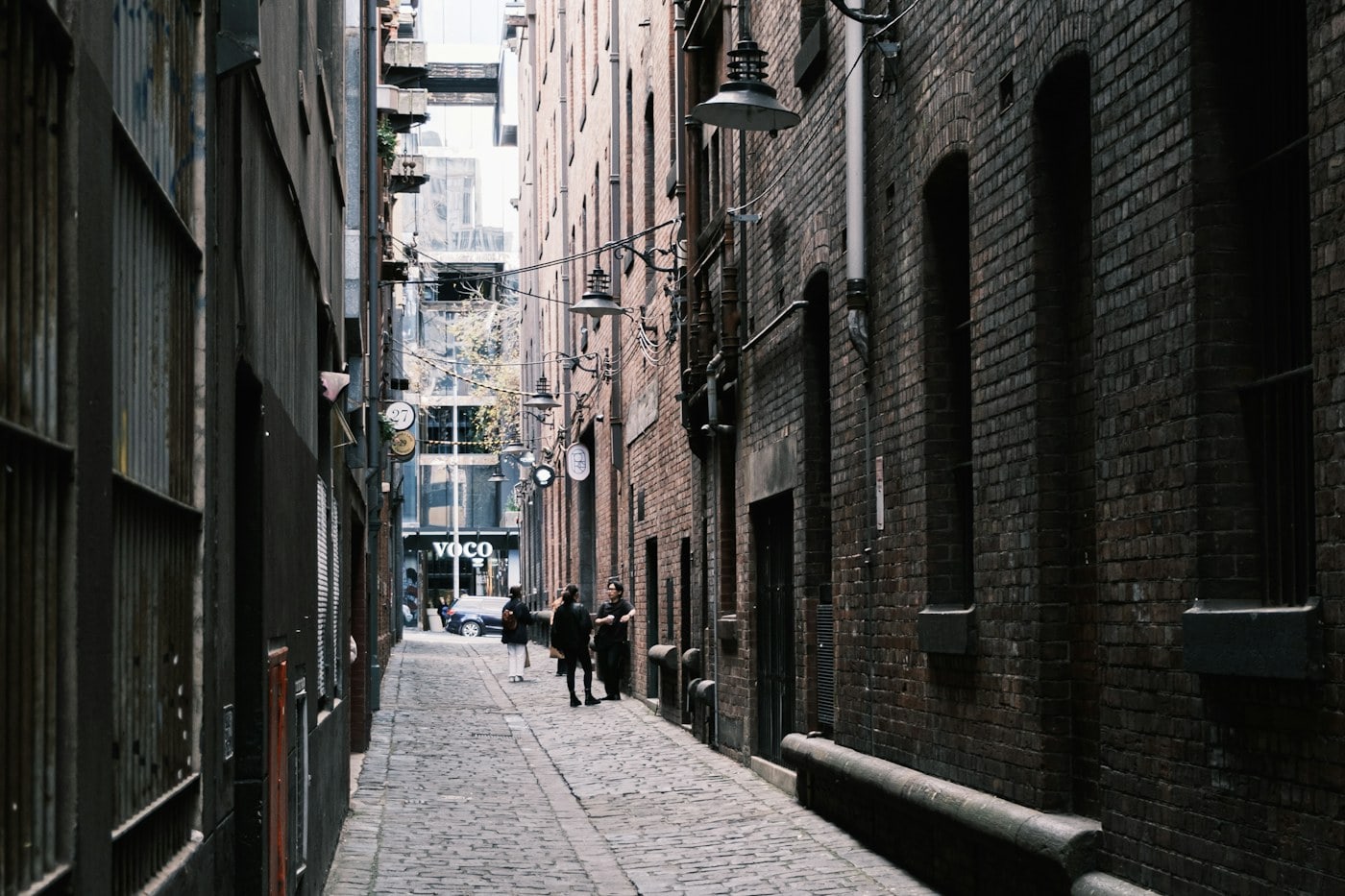
A close may provide a passage, an entrance to buildings, or access to residential spaces. Some are public routes; others are not. Signs matter more than the atmosphere of an inviting archway. Where access is allowed, notice how light changes and how buildings rise above the narrow space. Keep voices low and do not peer through windows or open doors. A brief respectful look can reveal the city’s density without intruding on everyday life.
Follow clearly public connections and turn back when a passage becomes private or unclear; there is no need to investigate every doorway.
Choose one substantial interior
Edinburgh Castle, St Giles’ Cathedral, museums, and other historic buildings each invite a different kind of visit. Select one main interior according to your interests, then verify its own opening and ticket arrangements. A large attraction can take much of a morning and should not be treated as a quick prelude to a packed itinerary. The exterior city walk remains worthwhile if a ticket is unavailable or the queue is unappealing.
Leave an uncommitted interval after the chosen interior, allowing time to rest and adjust the walk instead of immediately pursuing another timed entry.
Let the Canongate change the tempo
Walking toward the Canongate can shift attention away from the busiest central stretch. Notice changes in street width, building detail, and the relationship between the main route and side spaces. The approach toward Holyrood provides a growing sense of the landscape beyond the buildings. It is a good moment to decide whether to continue outdoors or stop indoors, especially if wind and rain are strengthening.
Use a short Canongate section as its own walk when conditions are poor, rather than feeling obliged to complete the entire ridge.
Visit Grassmarket as a separate level
Grassmarket sits below the ridge, bringing the steepness of the Old Town into focus. The descent can be attractive, but it changes the route: a climb or another connection will be needed later. The open space offers a contrast to narrow passages and makes a useful meal stop. Look back toward the surrounding slopes to understand where the morning’s walk has taken you. Busy pavements and crossings still require attention.
Decide whether Grassmarket is your lunch destination or a brief detour, and identify the next connection before descending.
Use museums to balance weather
Edinburgh’s weather can turn quickly enough that a flexible indoor option improves the day. A museum should be chosen for genuine interest rather than merely as shelter, but a nearby collection can make a wet hour productive. Check current admission arrangements and opening information. Wet coats and bags can become awkward in galleries, so travel lightly and follow cloakroom guidance. Do not assume every public building offers the same facilities.
Keep an alternative within the district you are already visiting; crossing town just to escape rain can consume more time than it saves.
Separate the hill walks from the street walk
Arthur’s Seat and other elevated outdoor routes belong to a different kind of outing from the Old Town streets. Footing, exposure, weather, and navigation require their own consideration. A view of the hill from the city can be satisfying without a spontaneous climb. If a hill walk is important, allocate suitable time and consult current official route advice. Everyday city footwear and a nearly empty phone are poor foundations for improvisation.
Treat Holyrood Park as a separate decision, choosing an appropriate route for conditions and ability rather than adding a summit at the end of a tiring day.
Finish with a view you understand
A final look across the city has more meaning when you can recognize the ridge, the streets below it, and the landscape beyond. Choose a public place that fits the route home rather than chasing a distant sunset position. The Old Town’s attraction is its layered relationship between buildings and terrain. That relationship is visible in ordinary streets as much as in famous panoramas.
Allow a comfortable final leg, especially on wet paving, and return by a route whose climbs and stairs you have already considered.
Follow the Royal Mile’s changing names
The Royal Mile is a useful general name, but its changing street names help make the walk more precise. Castlehill and Lawnmarket occupy the western portion, High Street continues through the central section, and Canongate leads toward Holyrood. Look for these names while walking so that the route becomes a sequence of real places rather than one undifferentiated tourist street. The castle end feels different from the lower approach toward the palace, and adjoining streets reveal how the ridge narrows or opens. A short walk can focus on one section without needing to complete the whole line.
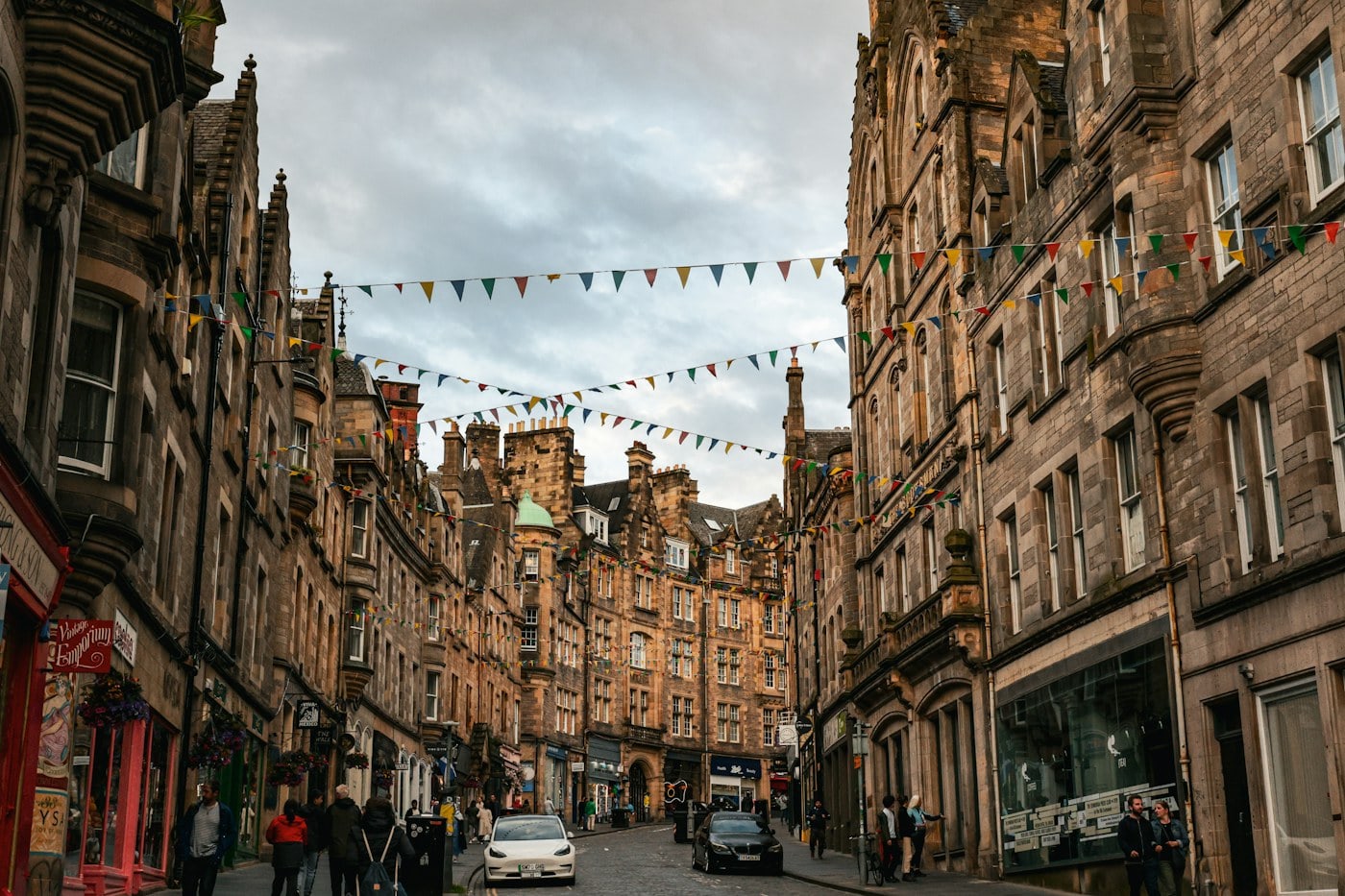
Around St Giles’ Cathedral, the wider street space offers a useful central pause. Consider the exterior setting before deciding whether an interior visit fits the day and the current arrangements. Nearby closes can illustrate the density of the Old Town, but access must be assessed individually. Moving south toward Victoria Street and Grassmarket creates a clear change of level and street character. Victoria Street’s curve and colorful shopfronts are visually striking, yet the pavements remain working routes. Step aside for photographs, watch crossings, and avoid spreading a group across narrow space. Once down in Grassmarket, look back toward the surrounding buildings to understand the descent.
At the eastern end, the Canongate and the approach to Holyrood make the relationship between city and landscape more evident. The Palace of Holyroodhouse is a separate substantial visit whose current opening arrangements should be checked directly. The Scottish Parliament’s exterior and the surrounding public realm offer a different architectural language from the older ridge streets. These contrasts can be appreciated on foot without adding a hill climb. If the weather is poor, keep the outdoor section compact and use a suitable indoor visit as the anchor. Edinburgh’s story is easier to read when old streets, later public buildings, and the land beyond are seen in relation to one another. Following the route’s changing names and levels gives a visitor a practical framework for that reading, while leaving room for the small details that make each section distinct.
The National Museum of Scotland, south of the Royal Mile, can be considered as a separate substantial indoor visit. Its broad collections should not be reduced to a quick shelter stop if they genuinely interest you. Check current opening and visitor information, select a few areas, and allow the museum to replace part of the outdoor route. The connection also makes the Old Town’s levels apparent: a short map distance does not remove the need to consider gradients and crossings. This is a useful example of how a weather alternative can become the main experience of the day, provided the rest of the schedule is simplified accordingly.
A wet-day version and a clear-day version
On a clear day, the Old Town can be organized as a ridge walk with one carefully chosen descent. Begin at an accessible point along the Royal Mile, follow a manageable section, and look into only those closes that are clearly public. The walk gains meaning when you understand the level changes rather than continually dropping downhill and climbing back. A substantial interior visit can provide the morning’s focus, while lunch near the route offers time to decide whether Grassmarket or the Canongate belongs in the afternoon. Keep enough energy for the return stairs and slopes.
On a wet or windy day, reduce the outdoor line. Choose one main interior after checking its current arrangements, then connect it with a shorter street walk and a seated meal. The Old Town remains visually interesting in unsettled weather, but wet paving and gusty exposed spaces change the practical experience. Trying to preserve every outdoor stop can make the day feel like an argument with the conditions. An indoor collection or a thoughtful visit to a historic building is not a lesser version of Edinburgh; it simply shifts attention from the skyline to another layer of the city.
Neither version needs an unplanned hill climb. Arthur’s Seat is visible from many places, and seeing it as part of the urban landscape is an experience in itself. A route into the hills should be assessed separately using appropriate information, equipment, and time. Save that outing for conditions and energy that suit it. For the street walk, a modest notebook can be useful: record the name of one close, the direction of a view, or a building detail you want to understand later. This keeps the day personal without turning it into a photography assignment. Edinburgh’s layered terrain becomes clearer through repeated small observations, and a short route walked attentively can explain more than a long one completed in haste.