Seoul at Street Level: Alleys, Markets, and Everyday Connections
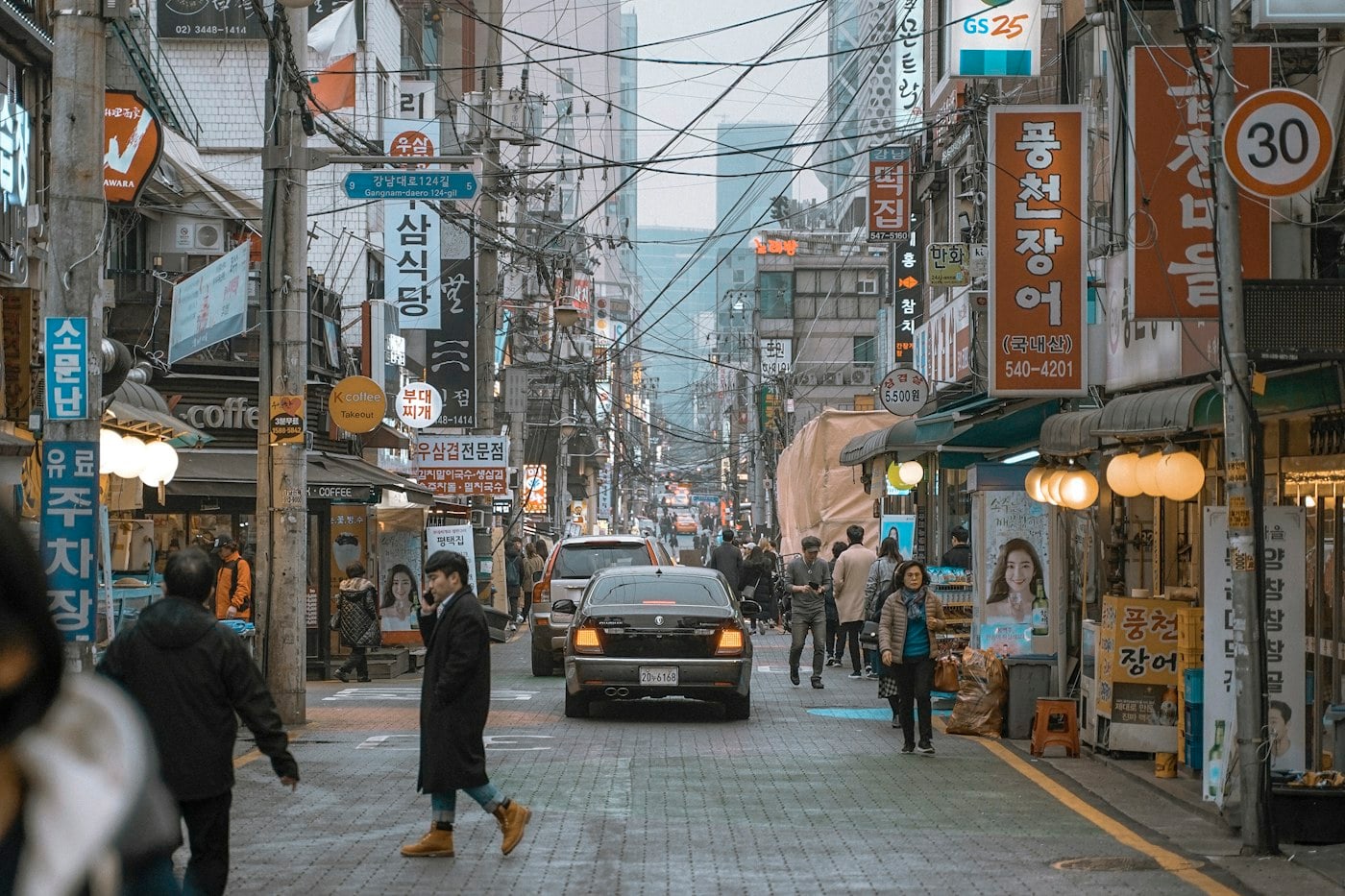
Seoul is often described through contrasts, but a walk at street level reveals something more connected: small businesses beside major roads, old street patterns linked to rail stations, and neighborhoods with distinct daily rhythms. Markets and alleys provide a useful way to explore, as long as they are approached as working places.
A different way to arrive
Seoul is often described through contrasts, but a walk at street level reveals something more connected: small businesses beside major roads, old street patterns linked to rail stations, and neighborhoods with distinct daily rhythms. Markets and alleys provide a useful way to explore, as long as they are approached as working places. Choose a compact area, learn its nearest transit connection, and give a few streets your full attention.
Choose a neighborhood-sized day
Seoul’s public transport network makes distant districts seem easy to combine, yet transfers and station exits still take time. Start with one main area and identify the correct exit for the walk. A short first loop establishes where broad roads and smaller lanes meet. Resist collecting neighborhoods on opposite sides of the city simply because each sounds essential. A second area can remain optional once lunch and the first walk are complete.
Save the place name and address in a form useful locally, and keep a return station in mind before wandering away from the main streets.
Walk through a market as a customer
A market is a workplace with deliveries, queues, narrow aisles, and customers who may be moving with purpose. Look first, step aside to decide, and buy something when it interests you. Gwangjang Market is one well-known option, but the name alone does not determine the best experience. Consider whether you want a food stop, a browse through goods, or a look at the building’s arrangement. These require different amounts of time.
Ask before photographing a stall or a person closely, and keep bags from swinging into displays in crowded aisles.
Give food its own pause
Eating while navigating can turn a promising stop into a confusing one. Choose a stall or restaurant where the menu and ordering process are manageable, then settle into the available routine. Some counters are suited to a brief meal; others offer a more comfortable seated break. There is no need to sample every dish associated with a district. A single meal enjoyed carefully leaves more attention for the afternoon streets.
Check ingredients with staff when necessary, keep an alternative nearby, and clear the seat promptly when finished if other customers are waiting.
Explore Insadong beyond a shopping list
Insadong is associated with craft shops, galleries, and traditional cultural businesses. The main pedestrian activity can be lively, while smaller public streets offer a different pace. Look at what individual shops actually sell rather than treating the district as one continuous souvenir display. A gallery or tea stop can provide a useful focal point, subject to its own visitor arrangements. Photography inside shops should follow the owner’s wishes.
Choose one craft or art interest before arriving, allowing the remaining time to be a walk rather than an obligation to enter every business.
Treat Bukchon as a residential district
Bukchon’s hanok streets are well known, but their popularity does not remove their residential character. Visitor restrictions, hours, and designated routes may change, and posted guidance must shape the walk. Keep voices low, do not enter private courtyards, and avoid photographing through doors or windows. A street can be appreciated without turning its residents into subjects. If a particular lane is restricted, continue elsewhere rather than searching for a way around the rule.
Check current local visitor guidance and use clearly permitted public routes, keeping the group compact and the visit considerate.
Notice the smaller scale around Ikseon-dong
Ikseon-dong’s compact streets and adapted buildings can create an appealing break from larger roads. Popular cafés and shops also create queues that occupy limited space. Choose a place because you want to spend time there, not merely because a doorway looks photogenic. Look at how contemporary businesses fit into the existing street pattern, while remembering that the district is not a preserved stage set. It continues to change.
Have a second café option and move to a wider street when planning the next stop instead of standing in a narrow passage.
Use the stream as a change of pace
Cheonggyecheon offers a different spatial experience from the surrounding streets: water, lower-level paths, and crossings framed by the city above. Access points matter if stairs are difficult, and weather can affect whether a waterside walk is appropriate. Follow closures and official instructions. A short section can provide enough contrast without committing to a long linear route that leaves you far from the next destination.
Identify an exit before starting the stream walk and keep the route short when rain or changing conditions make a longer section uncertain.
Let the return journey complete the map
The trip back through a station or along a familiar road helps connect the day’s small streets to the wider city. Avoid adding a distant market merely because there is still daylight. A final neighborhood meal, a bookshop, or an easy walk near your accommodation may be more satisfying. Keep enough phone battery for navigation and the correct station exit. The best discovery may be understanding how one district works rather than remembering every alley name.
Review the route while seated, then use a straightforward connection home instead of turning the last hour into another planning exercise.
Give each district a clear role
Gwangjang Market is particularly useful when the aim is a working-market food stop rather than a general shopping walk. The market is associated with dishes such as bindaetteok, a mung-bean pancake, but no single dish is compulsory. Look at a menu, consider ingredients and portion size, and choose a stall where the ordering routine is clear. A crowded counter may be better for a brief meal than a long conversation. Move away from the main aisle before deciding where to go next, and keep cameras from obstructing the exchange between staff and customers.
Insadong can provide a different focus through galleries, craft businesses, and shops connected with traditional arts. The experience is strongest when guided by one interest, such as ceramics, paper, or painting, rather than an attempt to enter every shop. Read labels and ask questions when appropriate, while recognizing that a shop is a business rather than a public exhibition room. Nearby smaller streets can create a pleasant walking connection, but not every courtyard is open. A tea stop may fit the district’s pace if you want a seated interval; check the menu and service arrangement before settling in.
Bukchon should be approached through current official visitor guidance because it is a residential hanok neighborhood with access considerations. The hanok rooflines and street scale can be appreciated from permitted routes without entering private frontage. If restrictions make the planned walk unsuitable, choose a different public area rather than looking for a workaround. Ikseon-dong offers another kind of compact urban setting, where older building forms and contemporary cafés or shops coexist. Its popularity can make narrow streets busy, so select one destination and keep a nearby alternative. These districts are not interchangeable examples of an old Seoul. Each supports different uses and different visitor behavior. A day that understands those distinctions can be both more considerate and more interesting. Connect only the areas that fit geographically and leave enough time to sit, eat, and navigate without hurrying through someone else’s everyday street.
Cheonggyecheon is most useful here as a short change of pace rather than a requirement to follow the stream for a great distance. Choose an entry and an exit that relate to the market or street district already in the plan. The lower path can feel visually separate from the roads above, yet reaching it and leaving it still require suitable access points. Check notices and avoid the waterside route when closures or weather make it inappropriate. A brief look from a bridge may provide enough contrast on such a day. The goal is a comfortable connection between experiences, not completion of a continuous urban walking challenge.
Separate two kinds of Seoul walking day
One Seoul day can be built around a market and a nearby urban walk. Start with a manageable market visit, move aside whenever you need to decide what to buy or eat, and choose a single food stop rather than attempting a tasting marathon. Afterward, a short section of Cheonggyecheon can offer a change in scale if conditions and access are suitable. The combination works because it alternates concentrated commercial activity with a more open linear space. Check where you will leave the stream before descending so that the return does not become an unnecessary detour.
A different day can focus on Insadong and a permitted route through the wider historic neighborhoods. A gallery, craft shop, or tea stop provides a reason to pause, while the surrounding public streets connect the experience. If considering Bukchon, verify current visitor guidance before arriving and let those rules shape the walk. Residential restrictions are not an obstacle to be negotiated away. They are part of visiting a living neighborhood responsibly. An attractive lane that is closed to visitors can simply be left out of the plan; another public street can still reveal the scale and character of the area.
Ikseon-dong may fit as an alternative stop when its location and atmosphere suit the day, but it should not become an automatic extra after every other district. Popular cafés can require waiting, and narrow streets have limited room for queues. Choose a place you genuinely want to spend time in, keep a second option nearby, and move to a wider space to discuss the next step. At the end, review the return station and exit while seated. Seoul’s size makes a simple final connection especially valuable. A day that leaves you understanding one neighborhood’s pattern is more useful than a series of distant stops remembered mainly through station transfers.