Istanbul Between Shores: Neighborhoods Connected by Ferry
Istanbul’s ferries give a journey room to breathe. They connect working districts across water that is also a busy transport corridor, offering a different sense of distance from the roads and rail lines.
A different way to arrive
Istanbul’s ferries give a journey room to breathe. They connect working districts across water that is also a busy transport corridor, offering a different sense of distance from the roads and rail lines. A ferry-based day works best when the boat links two neighborhoods you actually want to explore. Rather than collecting crossings, build an outing around one departure shore, one destination shore, and enough time to understand both.
Choose the crossing before the itinerary
The Bosphorus, the Golden Horn, and the wider Sea of Marmara shape different ferry journeys. A route across the Bosphorus is not interchangeable with a cruise or a service farther out on the water. Consult the operator’s current route map and identify the exact piers. Names that seem close on a map may refer to separate landing points. Start with a direct connection that serves the neighborhoods you want, then arrange the walking portions around it.
Check both the outgoing and return route and retain a land-based connection as a fallback if service or weather changes.
Make room for Eminönü
Eminönü is an energetic meeting point of waterfront movement, shops, transport, and monumental buildings. It can be enjoyed without rushing from one queue to another. Begin by finding the correct pier and understanding the approach; then use remaining time for a short walk through the surrounding commercial streets. Dense pedestrian traffic requires patience, especially around crossings and market entrances. Do not expect the waterfront to be a quiet promenade throughout.
Keep the first walk small enough that returning to the pier is straightforward, and avoid scheduling a timed interior immediately before departure.
Watch the crossing without chasing every view
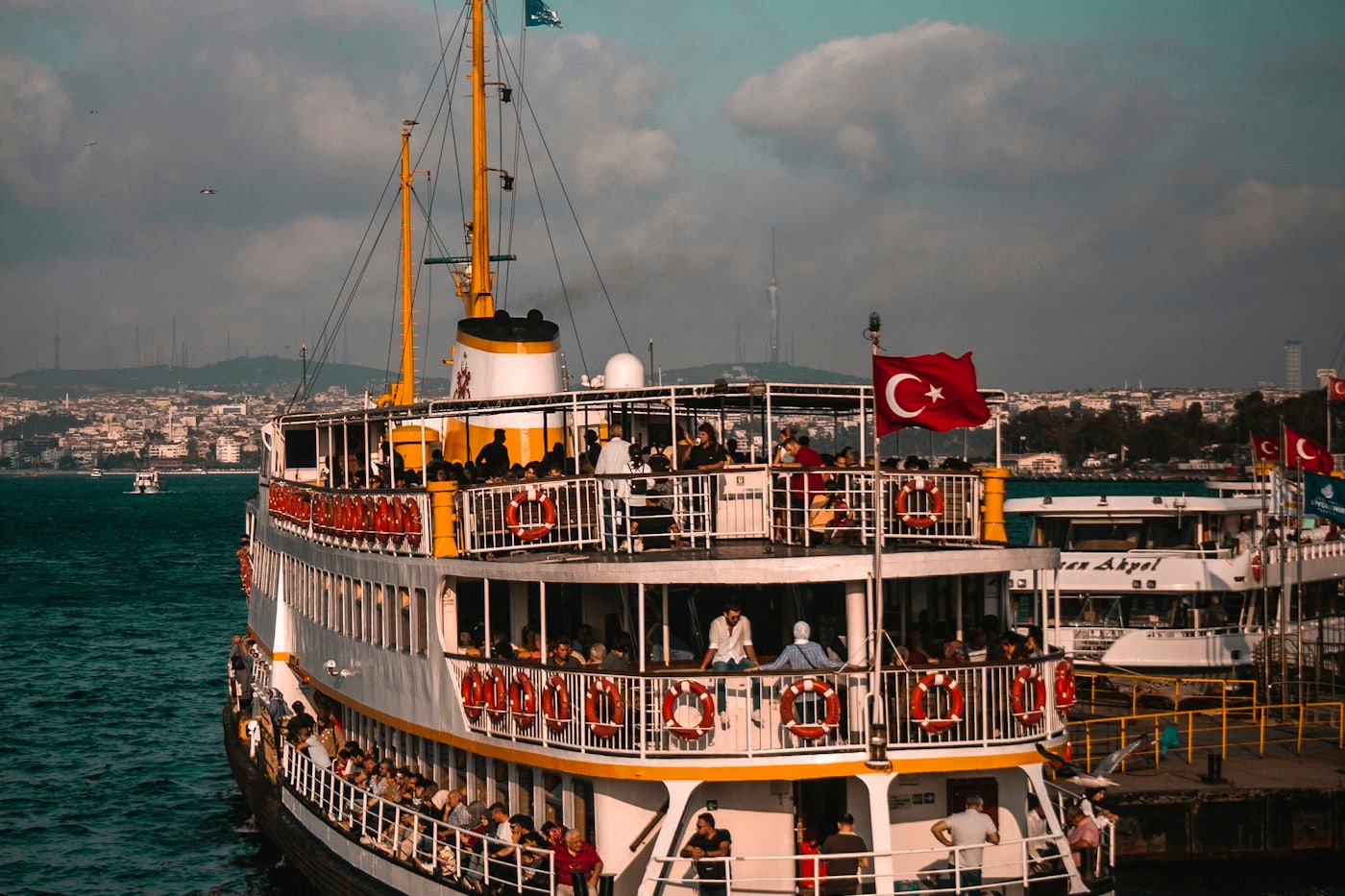
Once aboard, settle somewhere permitted and keep passageways clear. The changing view reveals how hills, buildings, and shorelines connect. Pick a shore to study for part of the crossing rather than constantly moving between sides. Conditions on an open deck can be cool or windy even when the streets feel warm. A secure camera strap and a light layer improve the experience more than an elaborate photography plan.
Stay behind safety barriers and follow crew directions; the ferry remains a working vessel even when the view feels like a sightseeing excursion.
Give Kadıköy a generous walking window
Kadıköy offers a dense mix of shops, food businesses, residential streets, and waterfront access on the Asian side. Begin with a small loop through the market streets, then decide whether to continue toward Moda. The area is much more than a food checklist: notice how the scale of a commercial street changes when it becomes residential. Choose somewhere to sit rather than treating every meal as something consumed between stops.
Use a clearly recognizable junction as an orientation point and allow enough time to return without hurrying through crowded streets.
Use Moda as a slower counterpoint
Moda’s streets and coastal spaces can provide a different tempo after Kadıköy’s busier commercial core. A walk toward the water offers a natural turning point, but distance should match the weather and the energy of your group. Sea views can draw attention away from shared paths and cyclists. Stay aware at crossings and choose a proper place to stop. The outing works equally well as a neighborhood lunch with a shorter coastal visit.
Choose whether the coast or the neighborhood streets are the priority; trying to cover both thoroughly can make a relaxed afternoon unexpectedly long.
Consider Üsküdar as another kind of shore
Üsküdar has its own waterfront and urban character, with views back across the water and connections into the surrounding streets. It is a separate option, not an obligatory addition after Kadıköy. Combining too many districts can reduce the day to transfers. If visiting a mosque, check visitor arrangements and respect prayer, dress expectations, and any photography guidance. Public waterfront space and an interior visit are different experiences with different requirements.
Choose Üsküdar when its waterfront and nearby streets match your interests, and allow a pause away from the immediate pier traffic.
Let food support the route
A ferry day naturally creates opportunities for a meal on either side of the water. Decide where you want the longer seated break before becoming tired and hungry. Menus, opening patterns, and queues vary, so keep a second option in the same district. Asking a vendor how ordering works is preferable to blocking a narrow counter while deciding. Food photographs should never obstruct staff or other customers.
Carry drinking water and use a comfortable seated meal to check the return route, rather than trying to organize the journey while boarding.
Return with the city’s geography in mind
The return crossing often makes more sense than the outward one because the shore now has familiar streets behind it. Look for the place you departed, then notice how it sits among the surrounding hills and waterfront structures. Finish near a connection that is easy to understand. If the return ferry is impractical, the success of the day does not depend on repeating it; use an appropriate current alternative.
Avoid building the day around a single last departure, and leave a buffer for finding the correct pier and boarding entrance.
A closer look at the neighborhoods behind the piers
At Eminönü, the Egyptian Bazaar and the New Mosque help explain why the waterfront is more than a departure point. Commercial activity, religious buildings, and transport overlap in a small area, creating a dense flow of people. Choose whether your pre-ferry walk is a market visit or an exterior neighborhood loop, because trying to do both quickly can create unnecessary stress. If entering a religious building, follow current visitor guidance and respect worship. The pier should remain the practical anchor: know its exact entrance before allowing the surrounding streets to draw you farther inland.
In Kadıköy, the market district around the central streets gives the ferry arrival a clear next chapter. Fishmongers, produce shops, bakeries, and places to eat sit among other businesses, so the interest is the working mix rather than a single compulsory food. Look for something that suits your appetite and ask how ordering works if the counter is unfamiliar. A simit can be a simple snack, while a seated meal allows more of a pause. Do not let the desire to sample many things turn vendors’ limited counter space into a prolonged photography stop. Buy, move aside, and enjoy the food where it is appropriate.
Moda offers a different pace from the busier arrival and market area. Choose a public-street route that reaches the coast without requiring a continuous shoreline march. The change in scale between shops, residential streets, and open water is the point of the walk. On another outing, Üsküdar can provide an entirely different shore experience. Its waterfront views and the Mihrimah Sultan Mosque near the pier create a recognizable setting, but any interior visit should be based on current arrangements. Do not assume that a route between two Asian-side districts is equivalent to the cross-water journey you began with; consult the actual ferry map and current services. Istanbul’s shore geography is easier to understand when each pier is linked to a neighborhood with a distinct purpose. One destination explored properly is enough to make the crossing feel like part of a real city day.
For a simple meal in Kadıköy, distinguish a bakery stop from a sit-down restaurant before joining a queue. A bakery can provide a quick choice to take away where permitted, while a restaurant offers the rest that a long market walk may need. Turkish tea can make a pleasant pause, but check where service is offered rather than assuming every waterfront seat belongs to a café. Keep the meal within the neighborhood you are exploring. Returning across the city for one recommended dish can interrupt the very rhythm that makes a ferry day enjoyable. The market’s ordinary variety is enough reason to eat locally and continue on foot.
Two shores are enough for a full day
For a first ferry-based outing, make the departure district part of the visit rather than a place to rush through. At Eminönü, find the correct pier before wandering away, then choose a short nearby walk that leaves an easy return. That simple check removes uncertainty later. Keep any shopping modest until after the crossing so that bags do not complicate boarding or a long neighborhood walk. A departure time can organize the morning, but it should leave room for pedestrian congestion and the practical process of reaching the right entrance.
On the destination shore, give Kadıköy a generous block of time. Begin with the market streets, decide on a seated meal, and only then consider continuing toward Moda. This order allows appetite and energy to shape the route. If the day is hot or the streets are crowded, a smaller loop may be more enjoyable than a long coastal extension. The waterfront can provide a turning point rather than a promise to keep walking indefinitely. Notice how the neighborhood changes between commercial lanes and residential streets, and avoid treating people going about their day as part of a sightseeing display.
Üsküdar can be saved for another day or chosen instead of Kadıköy. Its waterfront gives a different relationship to the city across the water, and nearby cultural visits require their own attention to current visitor arrangements. Choosing one destination shore allows time for these differences to emerge. The ferry crossing then becomes a meaningful link between places rather than an activity collected in isolation. On the return, a familiar skyline may feel easier to understand because you now know something of the streets behind it. Keep the final connection to your accommodation simple and avoid relying on a single last departure. A day with one good crossing, one thoughtful neighborhood walk, and one relaxed meal is already a substantial introduction to Istanbul’s geography.